In 2025, the revenue of the cutting tool industry reached 108.1 billion yuan, a year-on-year increase of 0.4%. The industry as a whole ended two consecutive years of decline, ushering in structural expansion and entering a critical period of transformation and upgrading towards high-end, intelligent, and green development.
Based on the needs of manufacturing development, multi-functional composite tools and high-speed, high-efficiency tools will become the mainstream of tool development. Faced with increasingly difficult-to-machine materials, the tool industry must improve tool materials, develop new tool materials, and more rational tool structures.
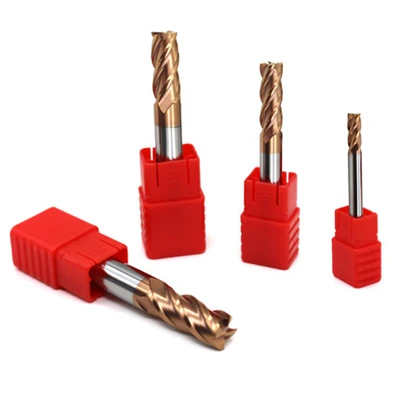
Increased application of cemented carbide materials and coatings. Fine-particle and ultra-fine-particle cemented carbide materials are the development direction; nano-coatings, gradient structure coatings, and coatings with entirely new structures and materials will significantly improve tool performance; the application of physical vapor deposition (PVD) continues to increase. Coating technology is developing towards diversified film materials, diversified process combinations, and nano-microstructures, such as composite coatings, combined processes, and nano-structure coatings, which significantly improve the wear resistance, thermal stability, and overall performance of tools.
Increased application of new tool materials. The toughness of tool materials such as ceramics, cermets, silicon nitride ceramics, PCBN, and PCD has been further enhanced, and their applications are increasing.
Rapid Development of Cutting Technology. High-speed cutting, hard cutting, and dry cutting continue to develop rapidly, with their application scope expanding rapidly.
Intelligentization Becomes an Important Development Direction. The deep integration of cutting tools with artificial intelligence, sensing technology, and other technologies enables visualization, predictability, and adaptive optimization of the machining process, driving the industry's transformation from providing single products to providing integrated solutions of "cutting tools + software + services."
The Concept of Green Manufacturing is Increasingly Deepening. To adapt to the requirements of sustainable development, green cutting technologies such as dry cutting and high-speed cutting continue to develop. Tool design is evolving towards energy conservation and pollution reduction, emphasizing maximizing resource conservation and minimizing environmental impact throughout the entire life cycle.