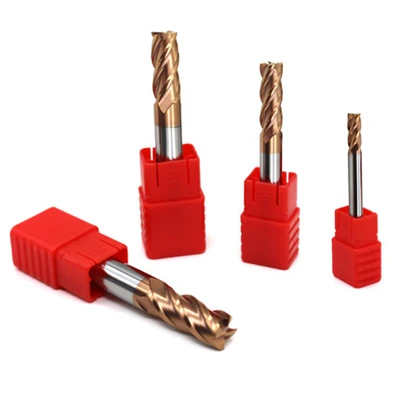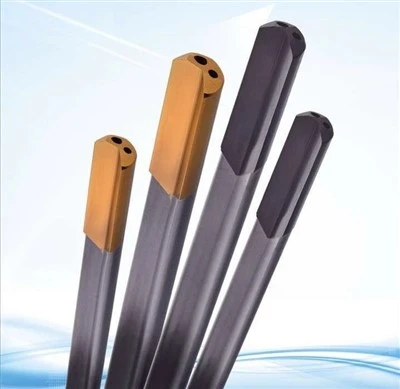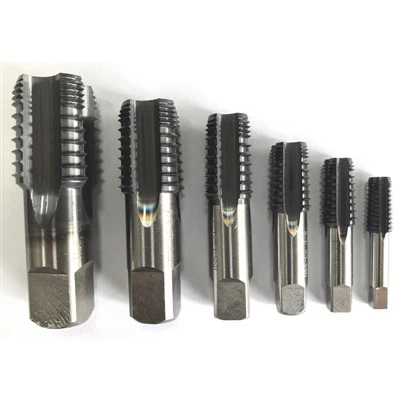
At this point, the product's form is almost identical to the final finished cutting tool. However, to achieve optimal cutting performance, a surface coating must be applied to the tool. The most common tool coating process is chemical vapor deposition (CVD), which involves ionizing a metal target using a high current and then depositing it onto the tool through evaporation and condensation. This process can be figuratively compared to asphalt road surfaces becoming very cold while the air is filled with a high concentration of water vapor, forming a thin layer of ice. However, unlike CVD, although the tool temperature in the coating furnace is relatively low, the actual furnace temperature can exceed 480°C.
Another commonly used tool coating process is physical vapor deposition (PVD). Compared to CVD, PVD technology can deposit a thinner coating, resulting in a sharper cutting edge and superior cutting performance when machining difficult-to-machine materials such as hardened steel, titanium alloys, and heat-resistant superalloys.
In a typical CVD tool coating process, the first layer of coating on the tool is titanium carbonitride (TiCN). This coating material offers excellent wear resistance and readily bonds to the cemented carbide substrate. Typically, alumina (Al2O3) is used as the second coating layer. This coating exhibits excellent thermal and chemical stability, protecting the insert from the high temperatures of cutting and the adverse effects of the chemical composition of the coolant.
The thickness of the TiCN and Al2O3 coatings depends primarily on the type of machining the insert is being machined. For example, when turning hard materials, sufficient protection of the insert is required, so the thickness of each coating may need to reach 10 μm. For finishing soft materials, a 5 μm thick TiCN layer and a 2 μm thick Al2O3 layer may be more appropriate.
After the TiCN and Al2O3 coatings are prepared, the cutting insert is nearly functionally complete. Unfortunately, the Al2O3 coating is entirely black, making it difficult for users to distinguish which working surfaces of the insert have been used and whether the cutting edge has worn. To address this issue, most tool manufacturers apply a final layer of titanium nitride (TiN) coating to the insert. This bright gold coating offers excellent visibility, allowing users to easily assess the wear condition of the cutting insert by observing its color changes.
In the past, applying the TiN coating marked the completion of cutting insert manufacturing. However, in recent years, a final step has become increasingly common. During CVD or PVD coating processes, different coating materials shrink at different rates when the insert cools. This results in stress and microcracks within each coating layer. To eliminate these stresses and minimize microcracks, an advanced technique using a mixture of alcohol, alumina, and fine abrasive is employed for sandblasting. After sandblasting, the cutting insert manufacturing is largely complete.