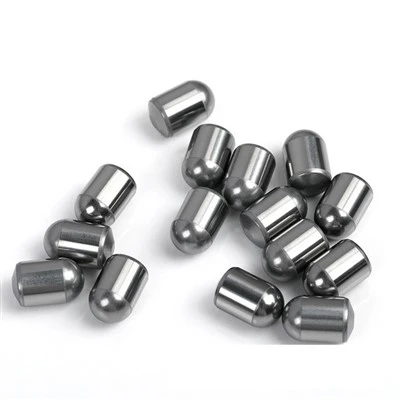
Cemented carbide spheres, commonly known as tungsten carbide spheres, are spherical material products made by sintering micron-sized metal carbide powders such as tungsten carbide (WC) and titanium carbide (TiC) with binders such as cobalt, nickel, or molybdenum through powder metallurgy. Cemented carbide spheres are primarily made of tungsten carbide (WC) and binders (such as cobalt (Co) or nickel (Ni)) using powder metallurgy, making them a two-phase composite material.
The hard phase, tungsten carbide (WC), typically accounts for 70%–97% of the total volume, providing extremely high hardness, wear resistance, and thermal stability. The binder phase, cobalt (Co), typically accounts for 3%–30% of the total volume. During sintering, it melts and encapsulates the tungsten carbide particles, acting as a binder and significantly improving the material's toughness and impact resistance. Cobalt-based binders improve strength, while nickel-based binders offer better corrosion resistance. Grades with a cobalt content of 6%–12% are commonly used in general applications.
The typical microstructure of cemented carbide spheres is a two-phase composite structure. During sintering, the molten binder phase forms a liquid phase, which, through a dissolution-reprecipitation mechanism, causes the tungsten carbide grains to pack tightly together. Upon final solidification, the binder phase encapsulates and firmly bonds the tungsten carbide grains in a continuous thin film, with the grains primarily linked by this binder film.
The composition ratio directly affects the performance of the cemented carbide balls. Lower cobalt content in the binder results in higher hardness and wear resistance, but lower toughness; higher binder content leads to better toughness, but correspondingly lower hardness and wear resistance. Therefore, by adjusting the binder ratio, the performance of the cemented carbide balls can be customized to suit different applications. Hardness, toughness, and corrosion resistance can be controlled by adjusting the binder content or additives to meet various application requirements.
To optimize specific properties, small amounts of additives such as titanium carbide (TiC), tantalum carbide (TaC), or niobium carbide (NbC) are sometimes added to improve the material's high-temperature hardness or oxidation resistance.