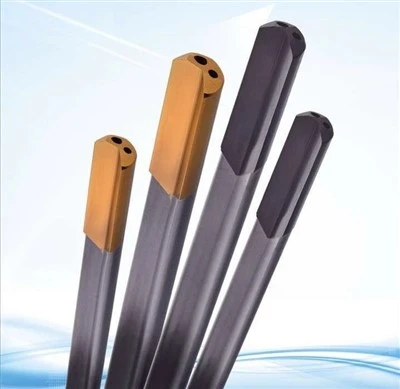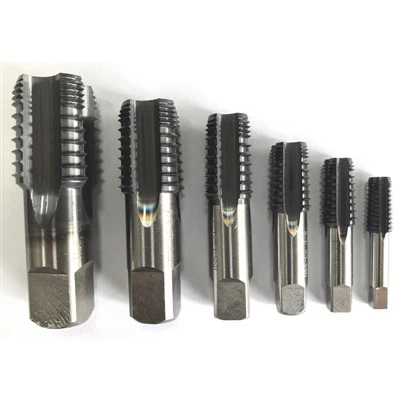
The selection of tool geometry angles must be determined comprehensively based on the workpiece material hardness, machining characteristics, and the rigidity of the machining system. The choice of rake angle (γ0) primarily addresses the conflict between tool strength and sharpness; a smaller rake angle is used for high-hardness materials, and a smaller rake angle is used for roughing, while a larger rake angle is used for finishing. The choice of clearance angle (α0) must consider the machining characteristics; a larger clearance angle is used for finishing, and a smaller clearance angle is used for roughing. The selection of the principal cutting edge angle (Kr) must consider the rigidity of the turning system; a smaller principal cutting edge angle is used for systems with good rigidity. The choice of rake angle (λS) mainly depends on the machining characteristics; λS ≤ 0° is used for roughing, and λS ≥ 0° is used for finishing.
Cutting parameters such as cutting speed, feed rate, and depth of cut have a significant impact on tool life, machining efficiency, and quality. Excessively high cutting speeds lead to rapid flank wear, while excessively low speeds result in built-up edge. The feed rate has a smaller impact on tool life than the cutting speed; the depth of cut has a relatively small impact on tool life. Traditional optimization methods, such as orthogonal experimental design, can be used to find the optimal parameter combination. Intelligent optimization methods, such as adaptive control systems based on sensing technology and AI (e.g., the O-MAT system), can monitor and optimize cutting parameters in real time.
With the development of intelligent manufacturing, tool selection and use are shifting from experience-driven to data- and model-driven approaches. AI-based industrial software (such as the "Plus" system) achieves adaptive optimization of cutting parameters and predictability of the machining process by constructing machining physical models and acquiring real-time data.