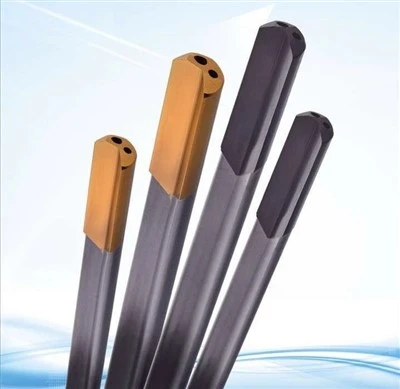
Establishing routine tool maintenance procedures in the workshop will extend turning tool life, prevent problems, and save costs.
Check if the insert holder is oversized due to wear, ensure the insert is correctly positioned on the side of the holder, and check the clearance with a 0.02 mm gauge. There should be no clearance at the fillet between the insert pad and the bottom of the insert holder, and the fillet of the insert pad in the cutting area should not be chipped or worn.
Use compressed air to clean dust or chips from the insert holder. If using a boring bar with a cutting head, the interface between the cutting head and the boring bar must be checked and cleaned when changing the cutting head.
To ensure optimal performance of the screw-clamping shank, tighten the clamping screw to the specified torque using a torque wrench. Excessive torque will cause the insert and screw to break, while insufficient torque will cause insert movement, vibration, and reduced cutting quality. Apply sufficient lubricant to the screw threads and head to prevent jamming, and replace worn or damaged screws promptly.
Optimizing cutting parameters is a key step in extending tool life. The three main machining parameters in turning are cutting speed (v_c), feed rate (f_n), and depth of cut (a_p). Cutting speed v_c has a significant impact on tool life. Too low a speed can easily lead to built-up edge and dulling of the cutting edge, while too high a speed can cause excessive wear on the flank, rapid wear of the crater, and plastic deformation. It should be adjusted to the optimal economic level. Feed rate f_n has a smaller impact on tool life than v_c. Too low a feed rate can lead to long, narrow chips, accelerated flank wear, and built-up edge formation. Too high a feed rate can affect chip control, reduce surface quality, increase power consumption, and may cause chip melting or impact. Depth of cut a_p has a relatively small impact on tool life. Too small a depth of cut may cause vibration, overheating, and is uneconomical, while too deep a depth of cut increases power consumption, cutting forces, and may even cause tool breakage.