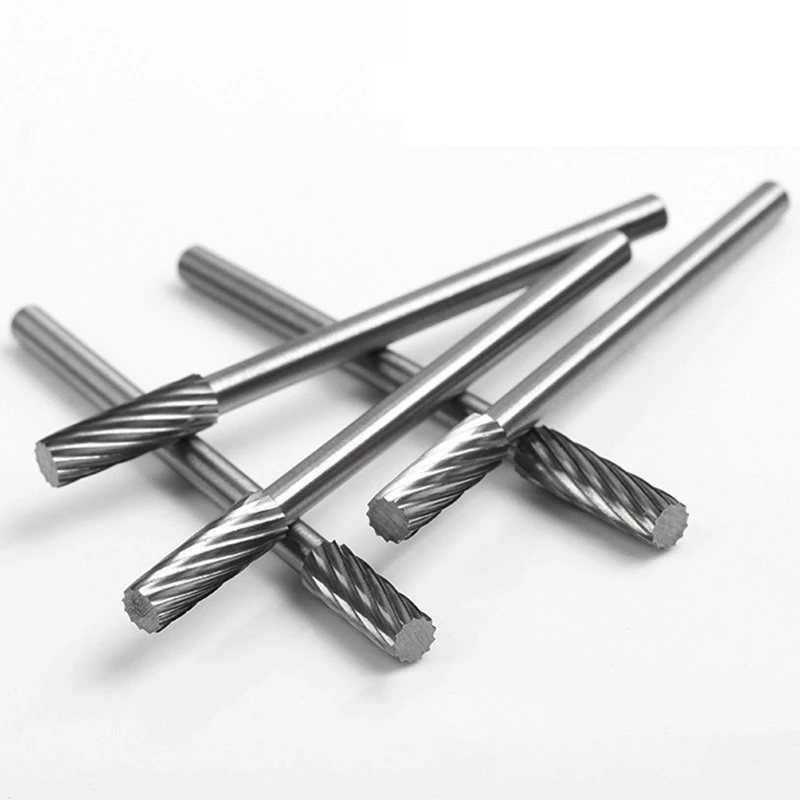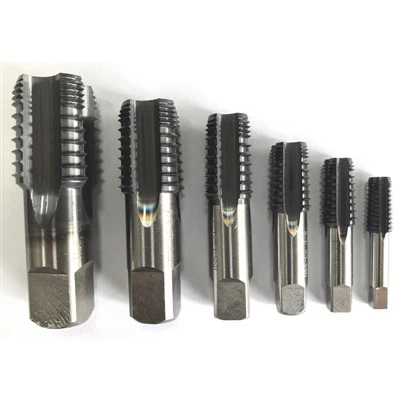


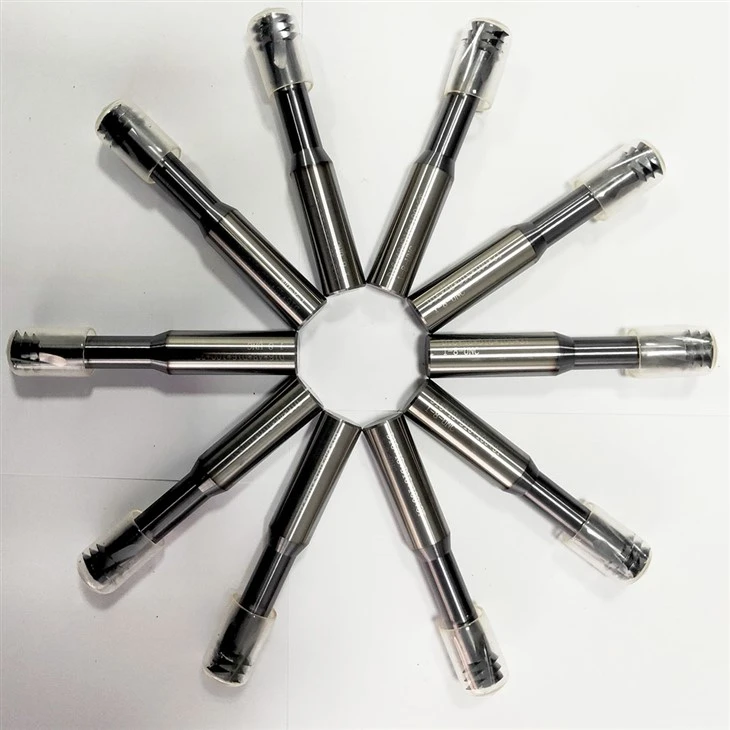
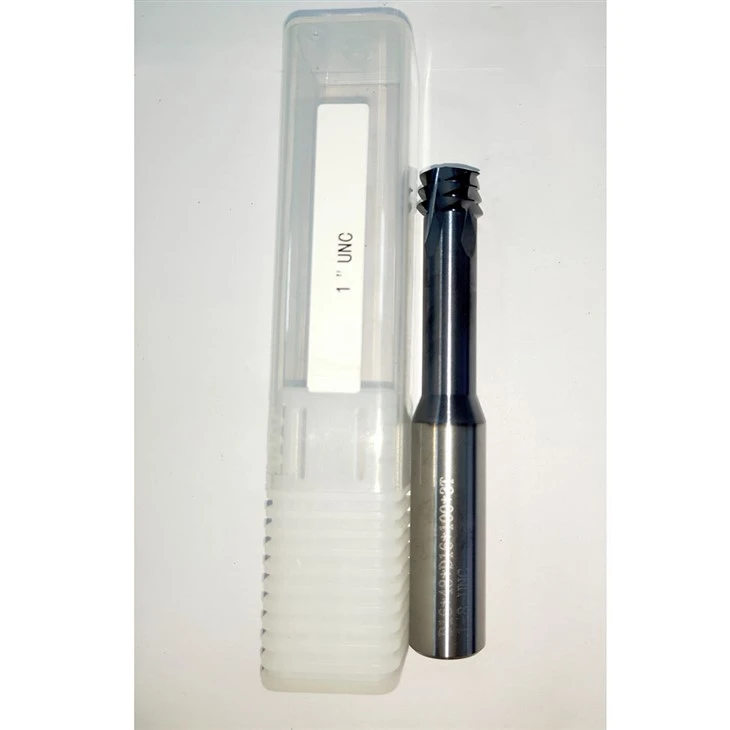
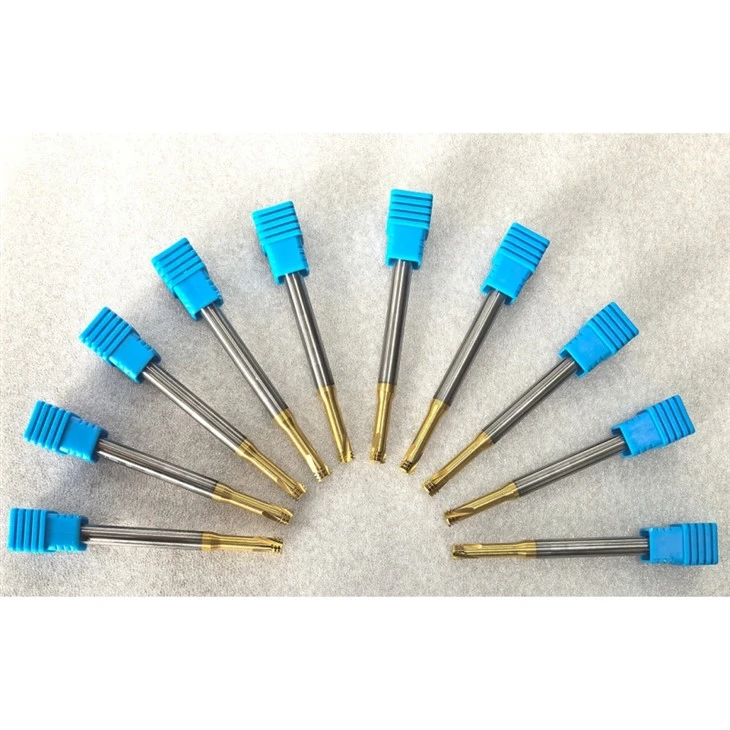
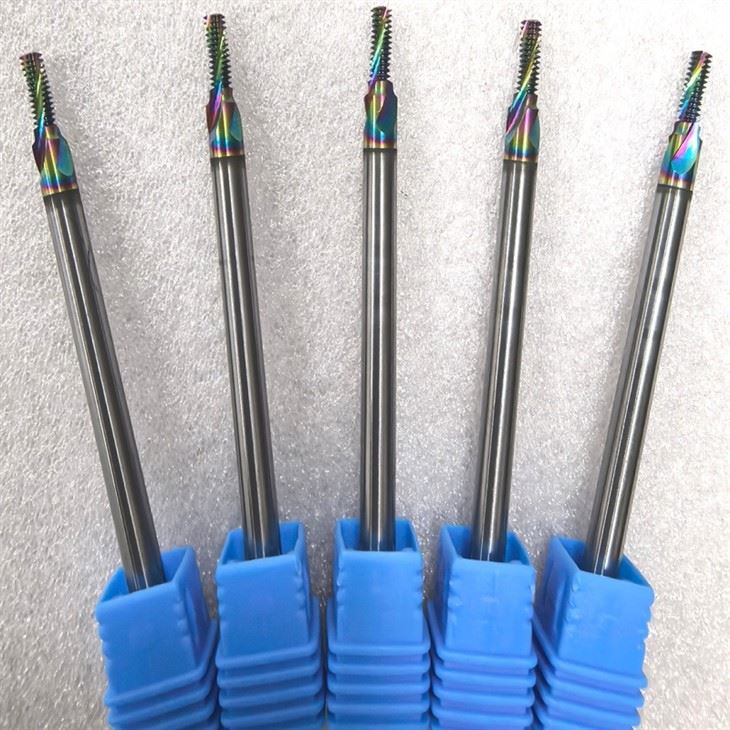
Traditional thread machining methods mainly involve using thread cutting tools for turning threads, or manually tapping and threading with taps and dies. With the development of CNC machining technology, especially the emergence of three-axis linkage CNC systems, more advanced thread machining techniques-such as CNC milling of threads-have become feasible. Compared to conventional thread machining methods, thread milling offers significant advantages in terms of machining accuracy and efficiency. It is also not restricted by thread structure or direction; a single thread milling cutter can machine various types of internal and external threads with different handedness. For threads that cannot accommodate transitional threads or relief grooves, traditional turning methods or taps and dies are difficult to apply, but CNC milling makes such operations easy to achieve. Moreover, thread milling cutters have a service life ten to dozens of times longer than that of taps. During CNC thread milling, adjusting the thread diameter is extremely convenient-a feature that is difficult to achieve with taps and dies. Due to these numerous advantages, developed countries have widely adopted milling processes for mass production of threaded components.

Principle
Thread milling is performed on a three-axis linked machine tool (such as a machining center). linked he X and Y axes move in a circular path using G03/G02, the Z axis simultaneously advances by one pitch (P) distance.
Advantages
★ Lower overall cost: Although individual thread mills are more expensive than taps, their cost per threaded hole is lower when considering total production.
★ Higher precision: Thread mills achieve accuracy through tool offset compensation, allowing customers to freely select the required thread tolerance.
★ Better surface finish: Threads produced by thread mills are smoother and more aesthetically pleasing compared to those made with taps.
★ Longer tool life: Thread mills last ten to dozens of times longer than taps, significantly reducing tool change and setup time.
★ No risk of breakage: If a tap breaks, it may damage or scrap the workpiece; however, even if a thread mill breaks, it can be easily removed without damaging the part.
★ Much higher processing efficiency: Thread mills operate far more efficiently than taps.
★ Blind holes can be fully machined to the bottom: Taps cannot reach the full depth of blind holes.
★ For certain materials, thread mills can drill, mill threads, and chamfer in a single operation-taps cannot do this.
★ A single thread mill can produce both internal and external threads with different hand directions-taps cannot.
★ For threads with the same pitch but different diameters, multiple taps must be changed; thread mills can be used universally.
★ When initial inspection fails, thread mills can be corrected via tool offset adjustment-taps cannot, resulting in scrapped parts.
★ For large-diameter threads, taps are inefficient; thread mills can complete the job instantly.
★ Thread mills generate short, powdery chips that do not clog the tool; taps produce long, spiral chips that tend to wrap around the tool.
★ Thread mills do not engage all teeth during cutting, resulting in lower machine load and cutting force compared to taps.
★ Easy clamping: Taps require flexible tapping holders; thread mills can use ER, HSK, hydraulic, thermal expansion, or other standard holders.
★ A single indexable thread mill body can accommodate metric, inch, and imperial inserts, offering excellent economic value.
★ When machining high-hardness materials, taps wear rapidly or fail entirely; thread mills can handle such tasks easily.

SPEC
|
Material |
Solid tungsten carbide |
|
Coating |
Uncoated or TiN or TiCN coated |
|
Chemical Composition |
10% Co & 90% WC |
|
Grain Size |
1.2 μm |
|
Hardness (HRA) |
≥90 |
|
Magnetic Force |
23 (KA/M) |
|
T.R.S |
3200 (N/mm2) |
|
Magnetic Saturation |
10.3 (Ms) |
|
Purpose |
Kind of tool to process thread |
|
Density |
14.05 (g/cm3) |
Tungsten Cemented Carbide Grade
Main

Hot Products


Company Information
Kunshan Zhiyi Dingli Cemented Carbide Tool Co., Ltd. locates the famous domestic tool and machinery equipment production base - Suzhou. The factory is mainly working on the production and development of all kinds of carbide tools, like end mill, tap, drill bits, carbide pilots. In China, our goal is to become the central base of manufacture of die-casting rods, carbide boring bar, standard cutters, non standard cutters and hard-machining cutters, establishing a good and healthy company image among coterie.
At present, the company can. In general, our products can be used in manufacture of mould, electronics, car engine and accessories, petroleum machinery, machinofacture, etc. We have stable customers, such as the United States, Russia, Indonesia, South Korea, Japan, Australia and so on.


Testing Machine

Production Flow Chart

Packing & Delivery
Packing
1>Put the goods encased with plastic bag or plastic case in wooden box/carton/iron box, etc.
2>Other packing will be accept according to your needs.


FAQ
Q1: How long is your delivery period?
A1: It depends on specific conditions. However, it could be 10 to 15 days on average.
Q2: Do you offer samples?
A2: Yes, we do offer samples. However, buyers need to pay for the freight charge. In addition, whether samples are free or not depends on the quantity you buy.
Q3: How do you pack the products?
A3: In general, we use wood, plastic or carton boxes. We also put some soft materials inside to prevent possible damage on products.
Q4: How much advance payment do I need to make?
A4: If the products you buy are in stock, you need to make full payment; if the products are out of stock, you need to make about 50 percent of full payment and then we will start the production process. However, you still need to pay the rest of charges before we deliver the products.
Q5: What kinds of payment do you accept?
A5: In addition to the patterns of payment shown above, you can discuss with us about in which way you would like to pay.

About Color Aberration
Product pictures are all physical photography, due to photo-taking technology, light, display parameters, etc., there may be differences between the received physical objects and photos, please refer to the physical.
Cargo Receipt
All our products go through strict inspection and count before shipment. Please check the goods in person when they receive them.
Please refuse to sign and contact us if you find that the CTN number and model is wrong or the product is damaged in transit.
Hot Tags: thread milling cutter, China thread milling cutter manufacturers, suppliers, factory, Carbide Rotary File, Pipe Thread Tap Drill, Spiral Flute Tap, Spiral Point Tap, Straight Flute Tap, threaded cutter