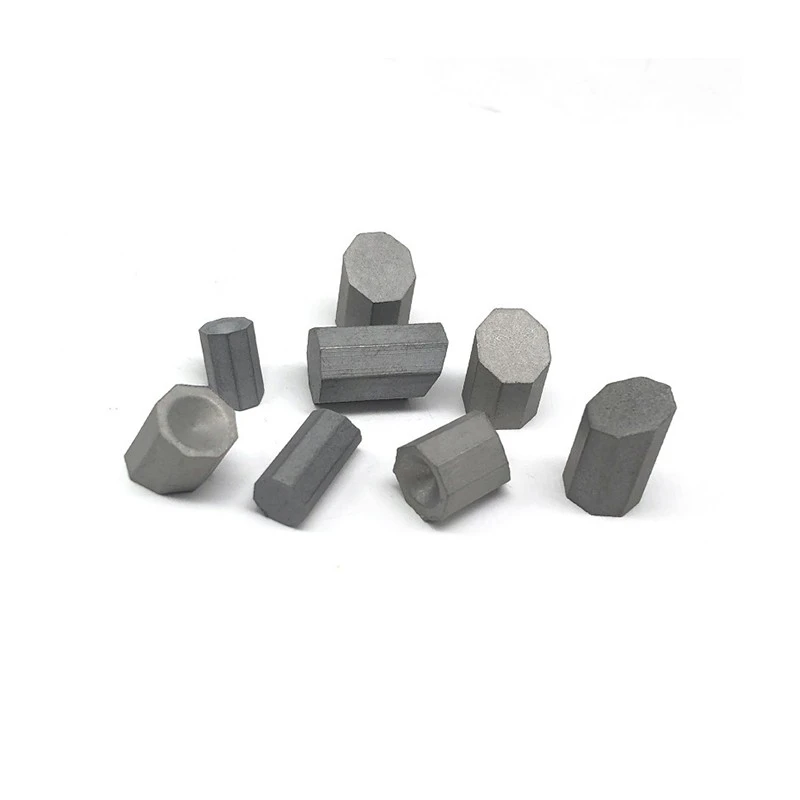
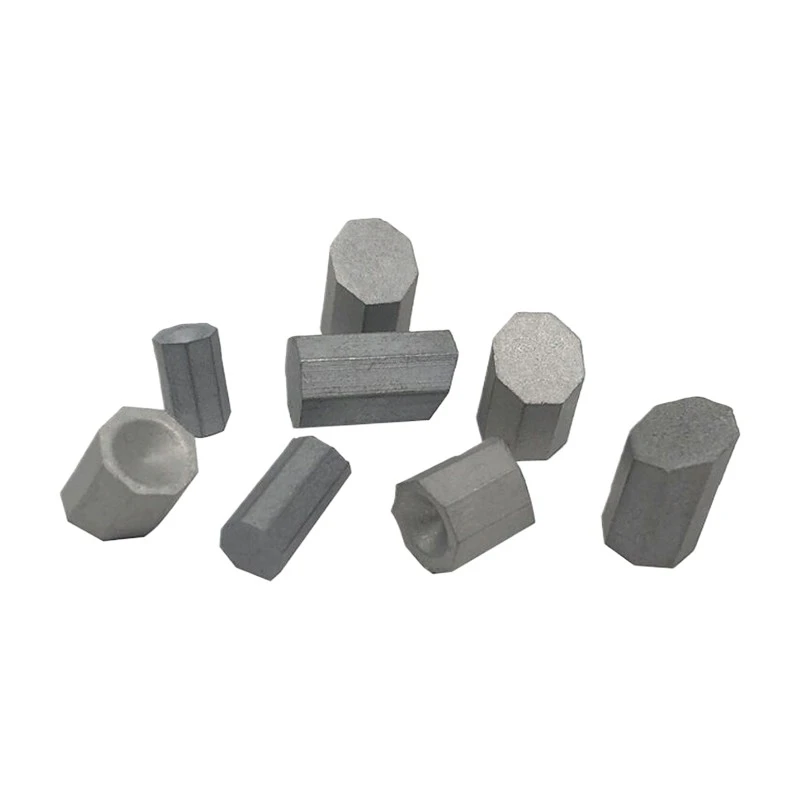

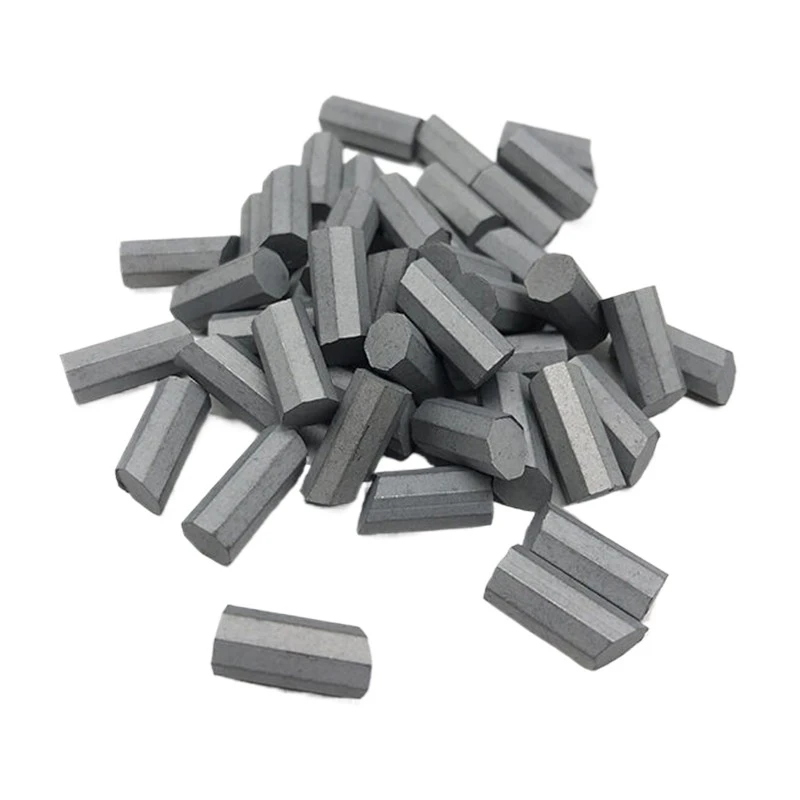
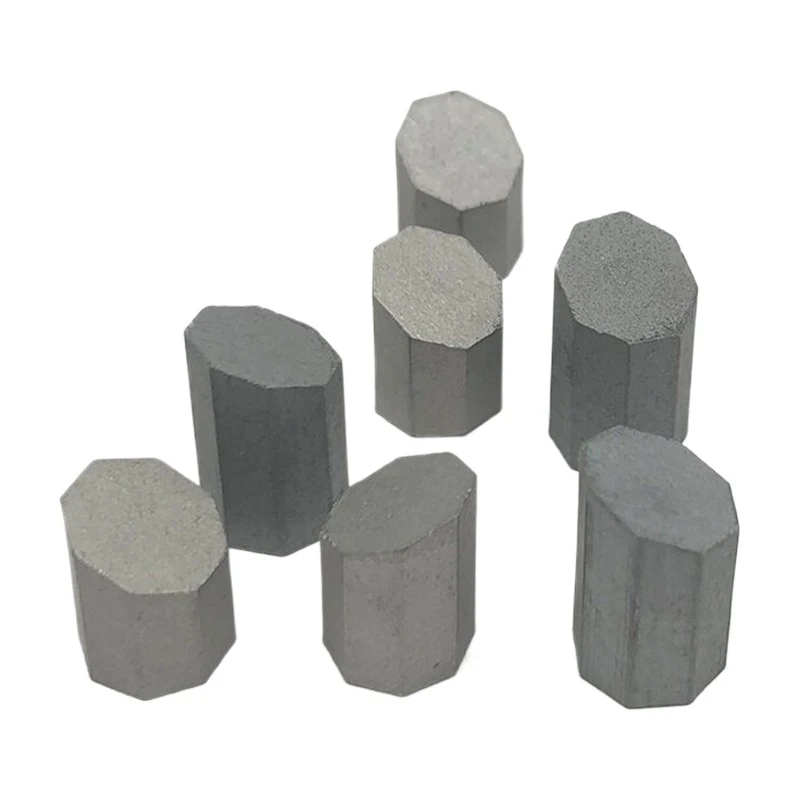
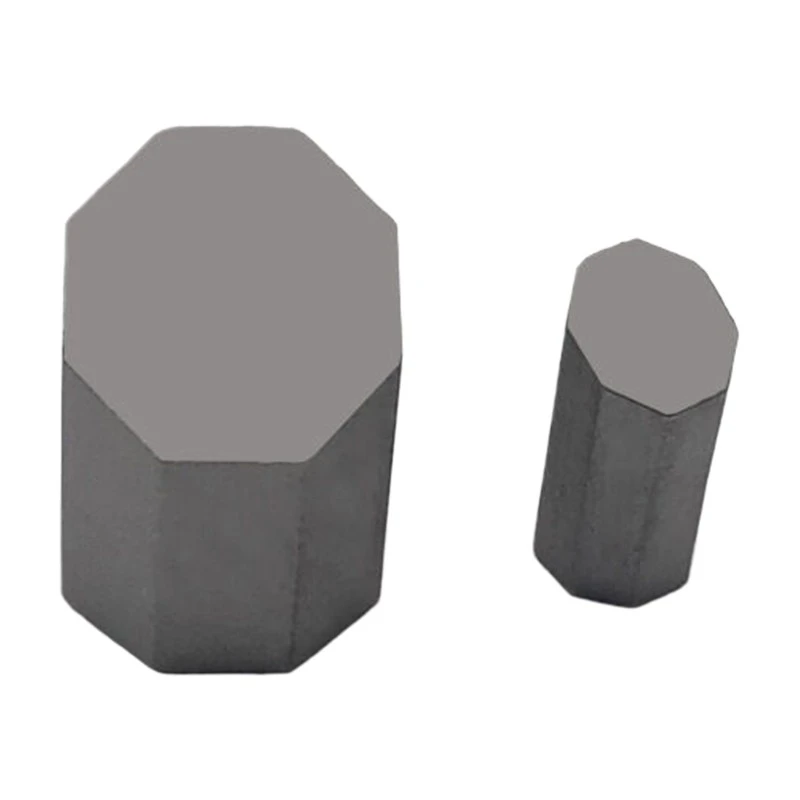
The mine engineering drill teeth is a tooth-shaped component made of tungsten carbide material used for the drill bit of a geological mining drilling machine.
The tungsten carbide drill teeth are the tooth-shaped components of the drill bit for geological and mining exploration machines, widely used in fields such as oil drilling, mining operations, and tunnel engineering. The hardness of tungsten carbide is second only to that of diamond, and its density is nearly twice that of iron.
This component is the "teeth" of the rock-breaking drill bit. It achieves the rock-breaking function through the toothed structure. In a tricone drill bit, it belongs to the type of inlaid teeth, and its main shapes include spherical teeth, conical spherical teeth, etc. The manufacturing process typically involves pressing metal powders such as tungsten and cobalt into blanks, and then sintering them at high temperatures.

Basic Definitions and Classification
The tungsten carbide drill teeth are the tooth-shaped components of the geological mining drilling machine drill bit made of tungsten carbide materials. In related products (such as triple cone drill bits), the tungsten carbide drill teeth are often referred to as "hard alloy steel teeth".
According to the way they are fixed on the drill bit (such as triple cone drill bits), they are mainly divided into two categories: inlay teeth (i.e., tungsten carbide teeth) and milling teeth (steel teeth).
The tungsten carbide teeth are mainly classified according to their shapes into spherical teeth, conical spherical teeth, wedge-shaped teeth, edge wedge-shaped teeth, and flat top teeth for the wheel back and claw tip, and different shapes are suitable for different characteristics of rock layers.

Structure and Design
The stepped surface is set on the tungsten carbide teeth, and at least 3 evenly distributed through-hole grooves are set on the circumferential surface of the teeth. At least 1 convex ridge is set on the bottom surface of the tungsten carbide teeth.
The range of the diameter size of the stepped surface is: 0.01mm ≤ (d1 - d2) ≤ 10mm, where d2 is the diameter of the small surface of the stepped part, and d1 is the diameter of the large surface of the stepped part.
The fixation method is to press the teeth into the tooth holes by interference, and then fill the gaps between the tooth holes and the teeth with solder to increase the soldering contact area and the fixation strength, and reduce the risk of the tungsten carbide teeth falling off.

Manufacturing Process
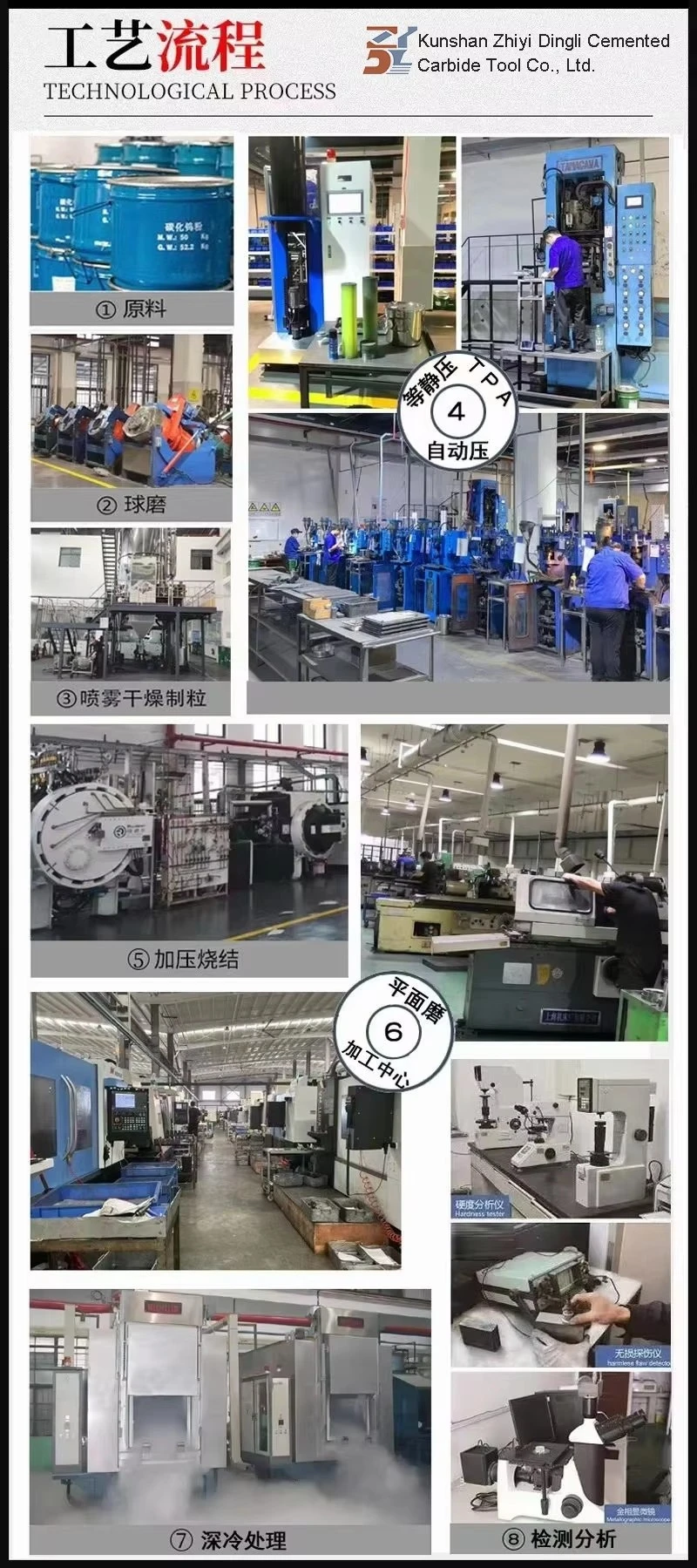
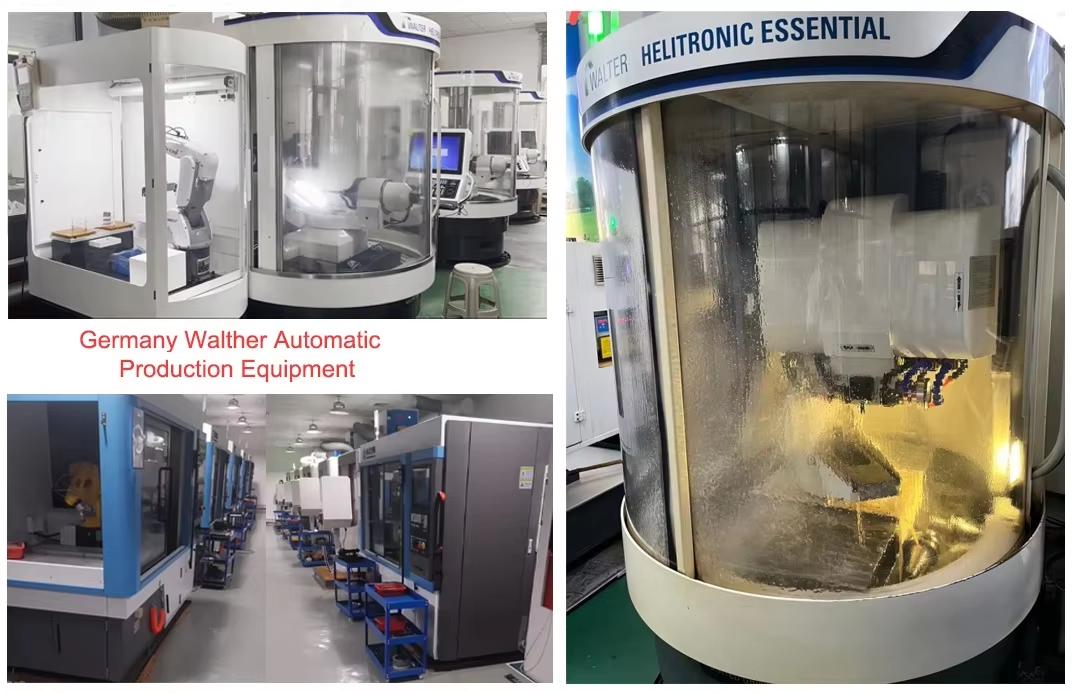
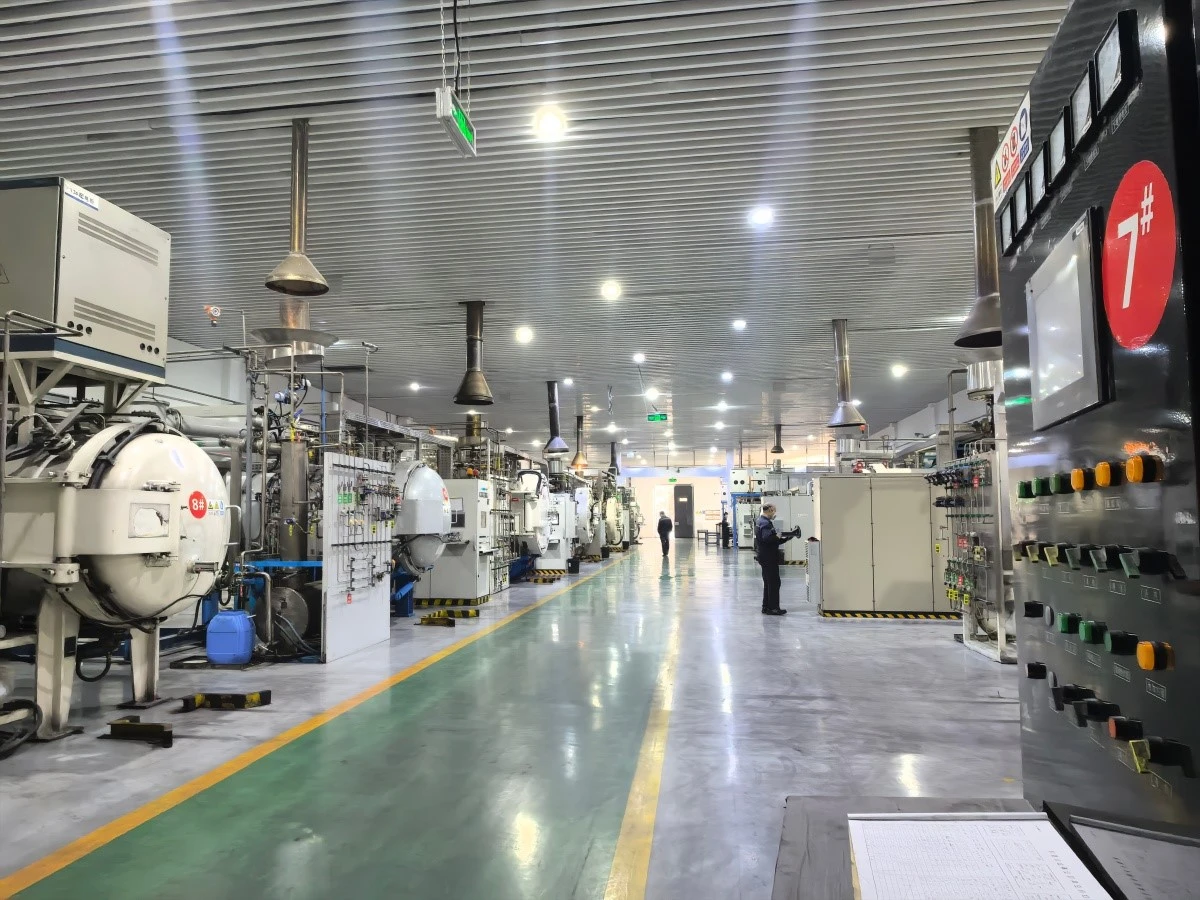
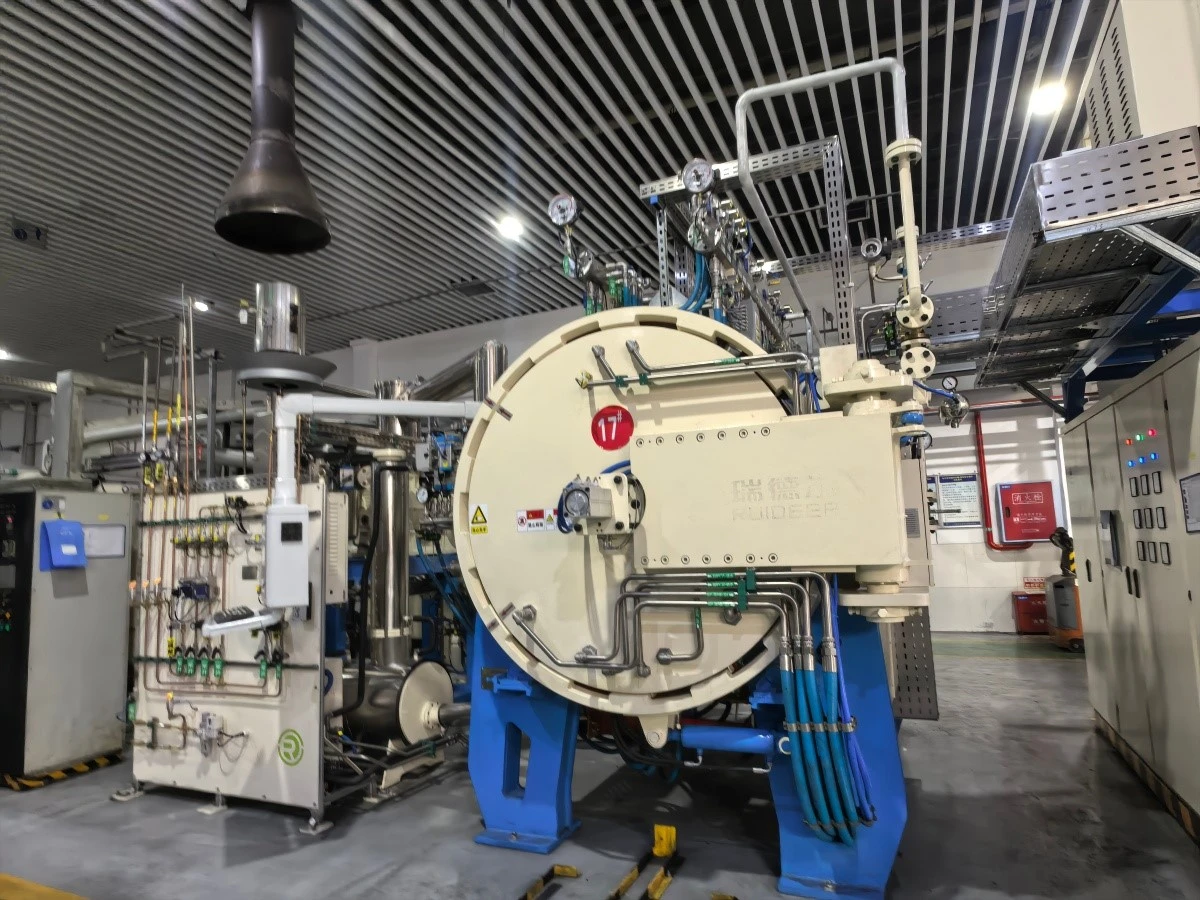
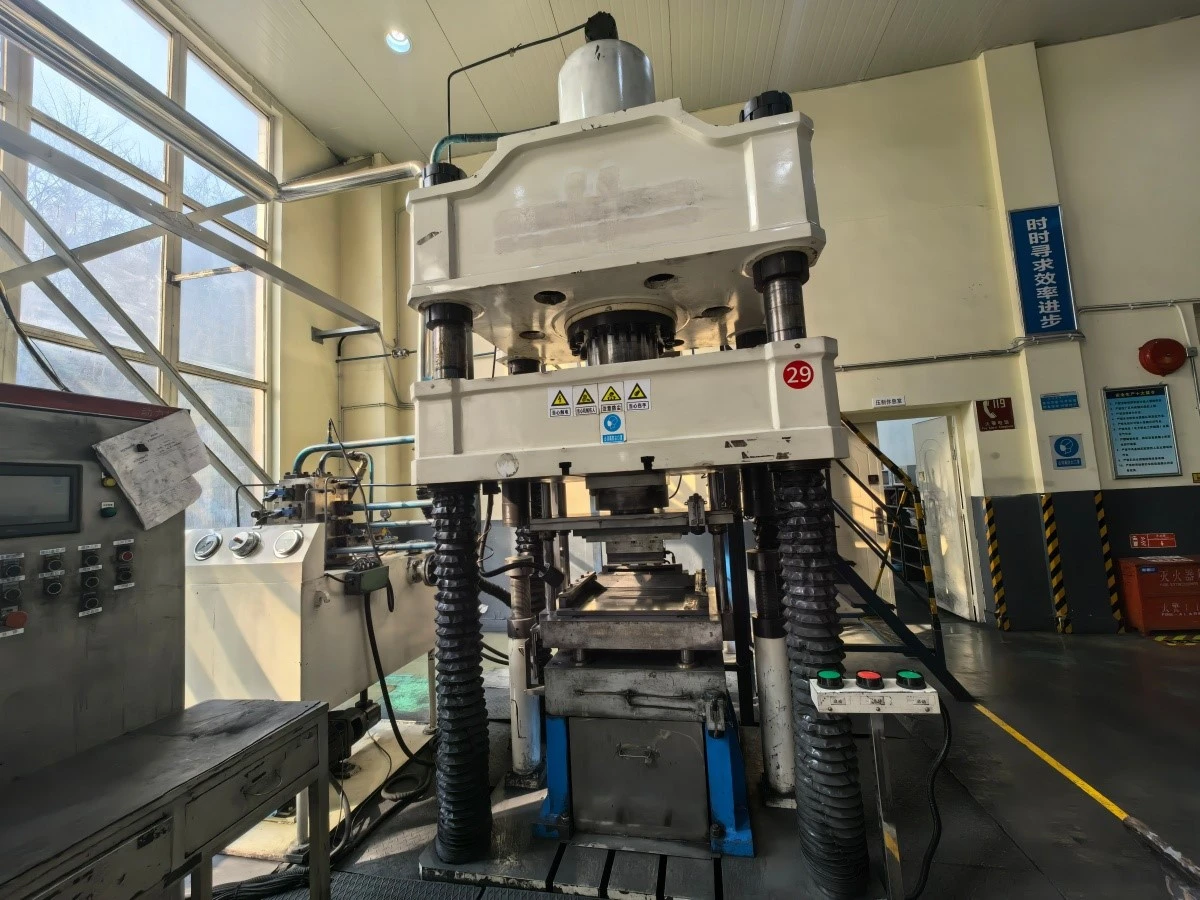
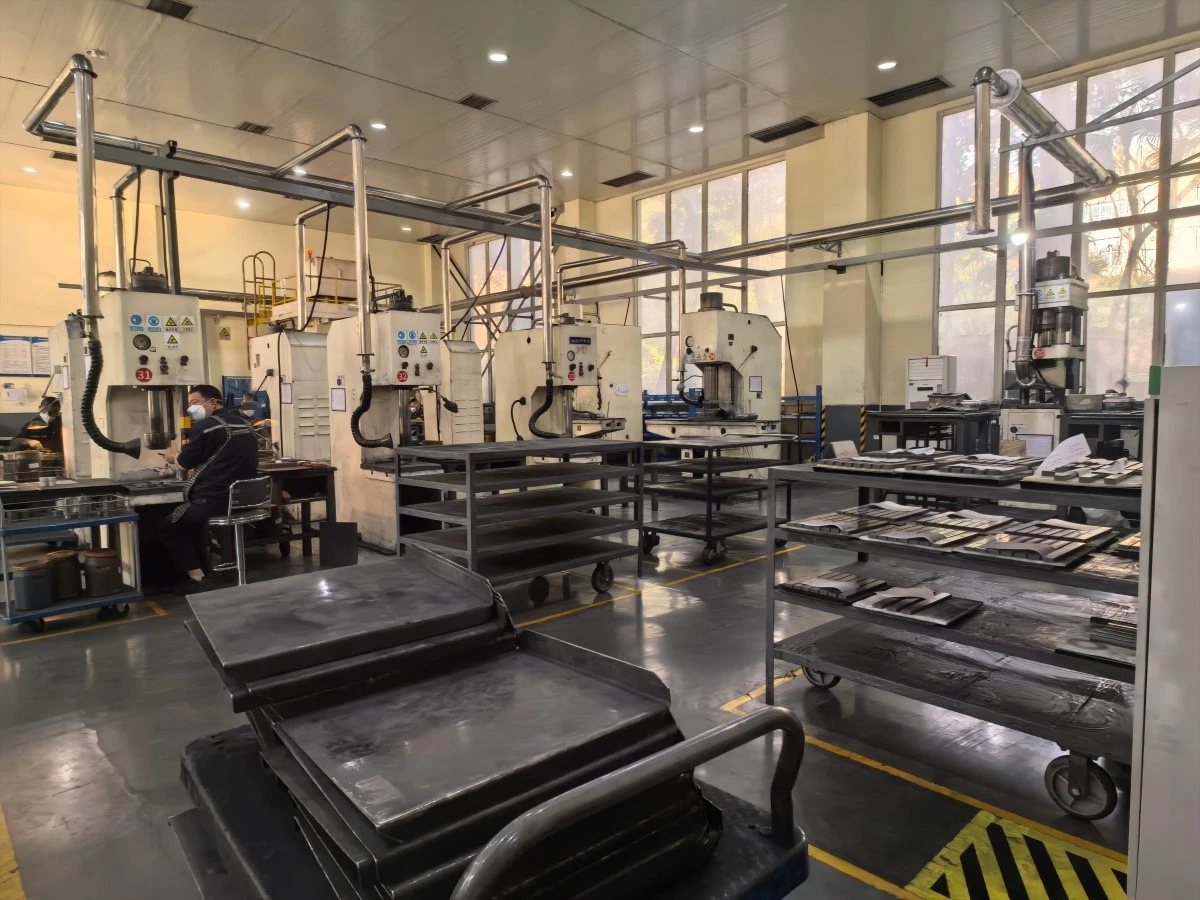
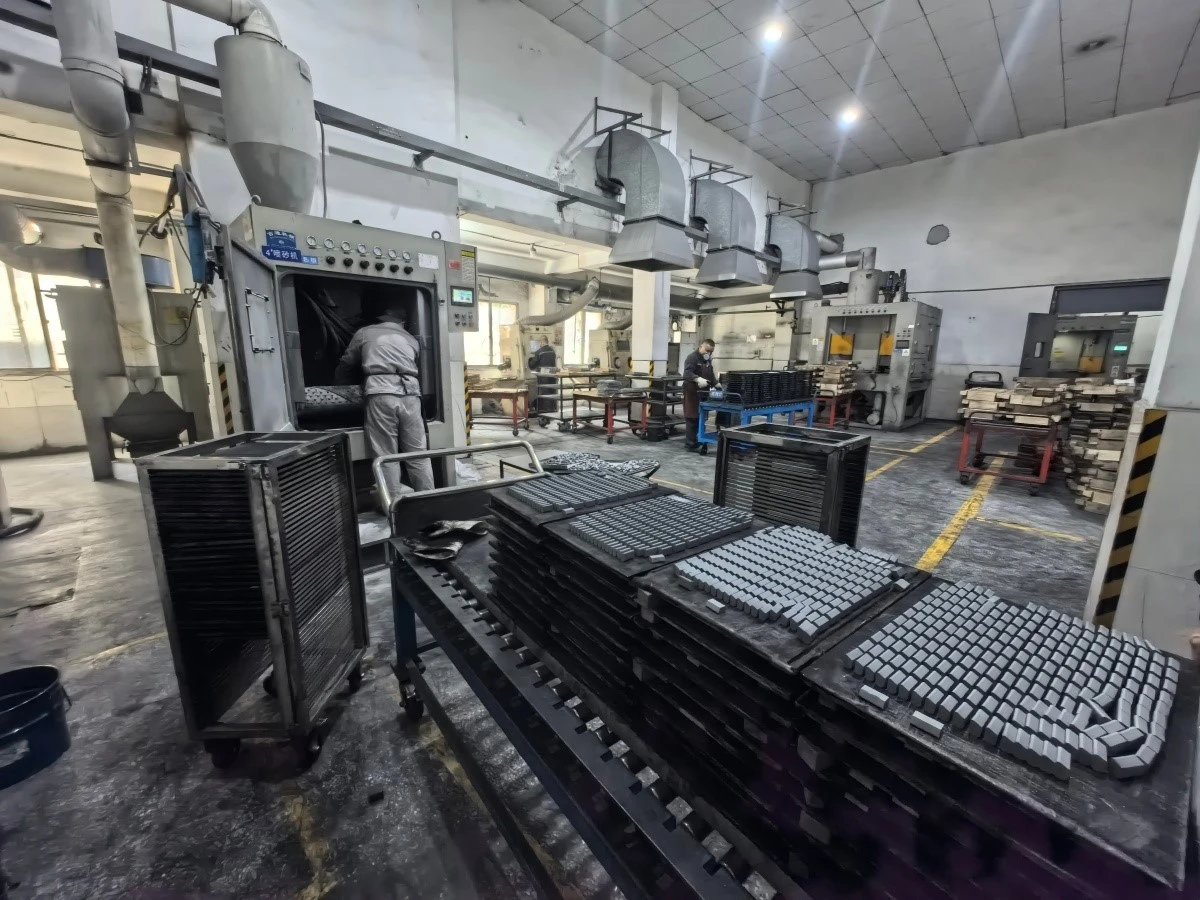
The mechanical arm automatically mixes the tungsten and cobalt metal powders in the right proportions. The fully automatic press machine compresses the powders into molds resembling dark gray clay blocks. The molds are automatically picked up by the mechanical arm, undergo weighing, deburring, and discarding, and then sent to the sintering furnace. Sintering is the key process, with the maximum temperature inside the furnace reaching up to 1600℃. The sintering process lasts approximately 30 hours. The sintering furnace employs resistance heating, imported insulation layers, and water layers technology. The outer wall temperature of the furnace can be controlled at around 60℃. After sintering, the dull-colored molds transform into high-hardness alloy products with a metallic luster that glimmers, and their density is nearly twice that of iron.
Performance Characteristics
The hardness of cemented carbide is second only to that of diamond. The density of cemented carbide is nearly twice that of iron.
The drill teeth made of cemented carbide require good wear resistance, high strength, and resistance to cracking and breaking. The application of cemented carbide teeth enables the drill bit to have the characteristics of wide adaptability to the formation and high mechanical drilling speed.
The cemented carbide drill teeth manufactured in China have achieved large-scale production. Their sales range covers multiple countries and regions around the world, and are supplied to some international mining companies. This product has been applied in the international market.

Application Fields
Tungsten carbide drill teeth are mainly used for drilling operations such as water wells, oil wells, mines, and geothermal wells. Their application scenarios cover geological drilling, mining (such as copper, iron, coal, etc.), tunnel engineering, engineering drilling, oil and gas extraction, hydrology, and trenchless engineering, etc.
Tungsten carbide drill teeth can be adapted to various drilling tools such as three-cone drill bits, low-pressure drill bits, high-pressure drill bits, truck-mounted drill bits, rotary drilling for coal mining and excavation, and shield cutting tools.
Maintenance and Selection

The size and shape of the tungsten carbide teeth used in a cone bit must be suitable for the characteristics of the rock, requiring good wear resistance, high strength, and resistance to cracking and breaking. The tungsten carbide teeth used in cone bits mainly include spherical teeth, conical spherical teeth, wedge-shaped teeth, edge-wedge teeth, and flat-top teeth for the wheel back and claw tip. Cone bits for drilling extremely hard rock layers use Q-shaped spherical teeth because Q-shaped spherical teeth have a denser tooth arrangement, a lower protrusion height, and a larger number of teeth. The wheel back and claw back are all embedded with P-shaped flat-top teeth. The tungsten carbide used in cone bits is a tungsten carbide-coated cobalt alloy, and different grades of tungsten carbides are used according to the operating conditions. In conditions with low impact load and high wear, good wear resistance is required, and alloys with a lower cobalt content are often used; while in conditions with high impact load, harder alloys with higher toughness are used, and impact toughness is improved by increasing the cobalt content and using coarse-grained tungsten carbide.
The damage forms of tungsten carbide cone bits include bearing damage, cone damage, cone tooth damage, and claw back tip wear. In the past, to improve the wear resistance and service life of the drill bit, from petroleum drill bits to mining drill bits, the process of casting tungsten carbide overlaying the working surface of the drill bit teeth was adopted. Currently, this process is still used in soft formation drilling, but in hard formations, tungsten carbide teeth have replaced it.


Hot Products

Company Information
Kunshan Zhiyi Dingli Cemented Carbide Tool Co., Ltd. is a professional manufacturer of mine engineering drill teeth (tungsten carbide tooth inserts) for geological and mining exploration drill bits. Our drill teeth are precision-manufactured from high-grade tungsten carbide, engineered to deliver superior hardness, wear resistance, and impact toughness in ore exploration, drilling, and tunneling operations. With consistent dimensional accuracy and durable performance, our teeth extend drill bit service life and improve penetration rates across a wide range of geological formations.
Our factory manufactures mine engineering drill teeth in over 220 standard profiles covering all major drill bit brands and configurations. With hot isostatic pressing (HIP) and precision grinding capabilities, we achieve consistent hardness and dimensional accuracy across large production batches. Monthly capacity of 60,000+ pieces serves mining and exploration customers in Australia, Russia, South Africa, and across Asia.




Testing Machine

Production Flow Chart

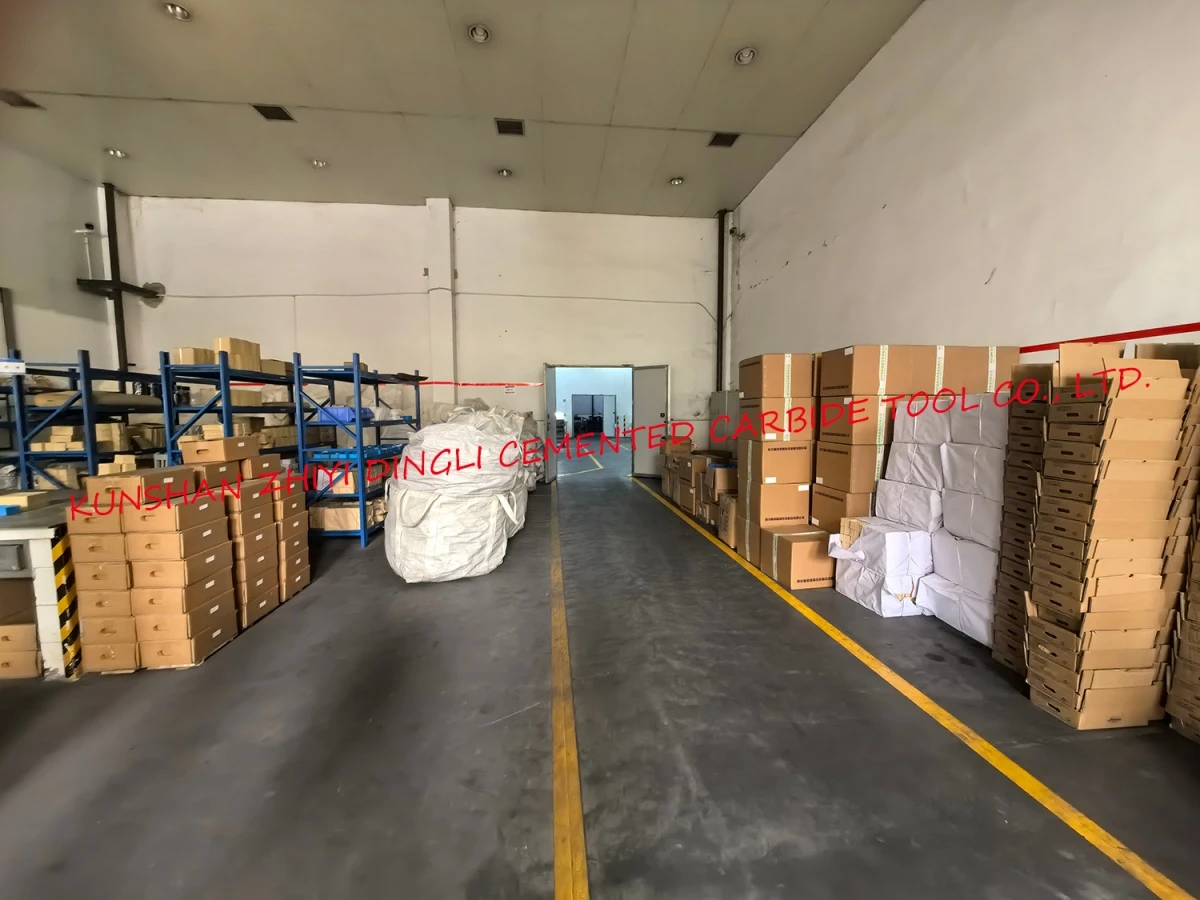
Packing & Delivery
Packing
1>Put the goods encased with plastic bag or plastic case in wooden box/carton/iron box, etc.
2>Other packing will be accept according to your needs.


FAQ
Q1: What drill bit brands are your teeth compatible with?
A1: Our teeth cover over 220 standard profiles for all major drill bit brands and configurations.
Q2: How do your teeth improve drilling performance?
A2: Our carbide teeth deliver superior wear resistance and impact toughness, extending bit life and improving penetration rates.
Q3: Do you offer trial orders?
A3: Yes, we welcome trial orders for qualification testing before volume purchases.
About Color Aberration
Product pictures are all physical photography, due to photo-taking technology, light, display parameters, etc., there may be differences between the received physical objects and photos, please refer to the physical.
Cargo Receipt
All our products go through strict inspection and count before shipment. Please check the goods in person when they receive them.
Please refuse to sign and contact us if you find that the CTN number and model is wrong or the product is damaged in transit.
Hot Tags: mine engineering drill teeth, China mine engineering drill teeth manufacturers, suppliers, factory, Brazed Chip Button, carbide mining, Coal Mining Teeth, Composite Matrix, Mine Engineering Drill Teeth, Oil Exploitation Drilling Bit Teeth