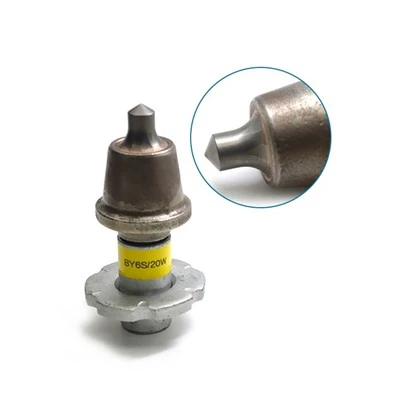


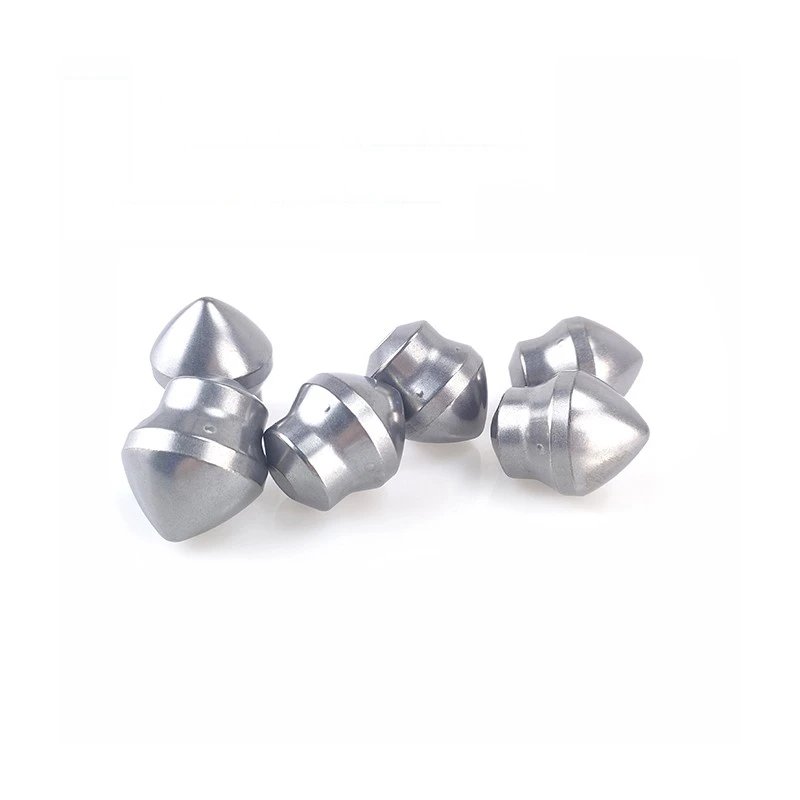

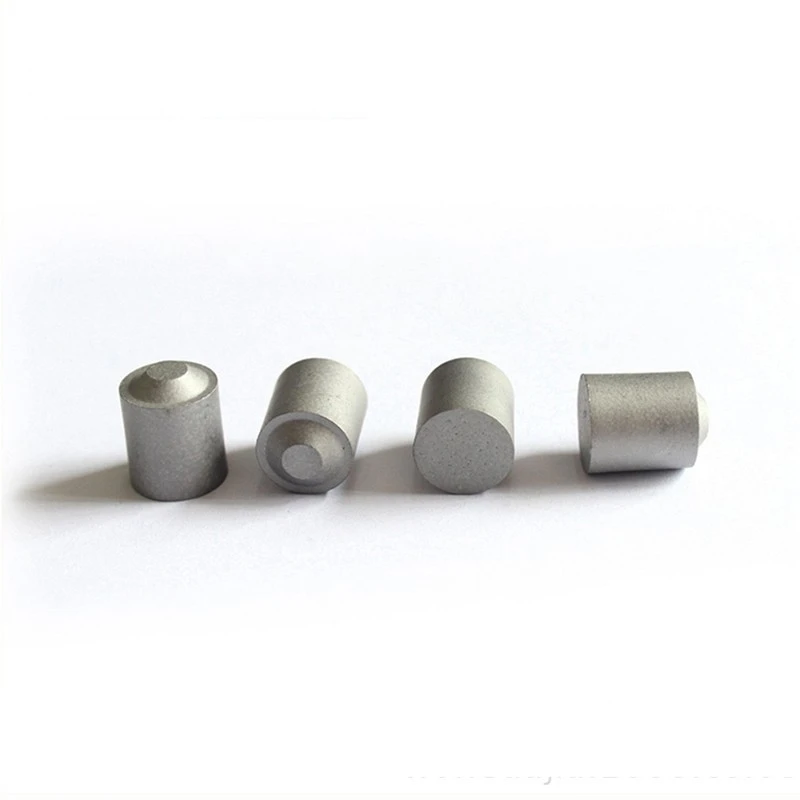
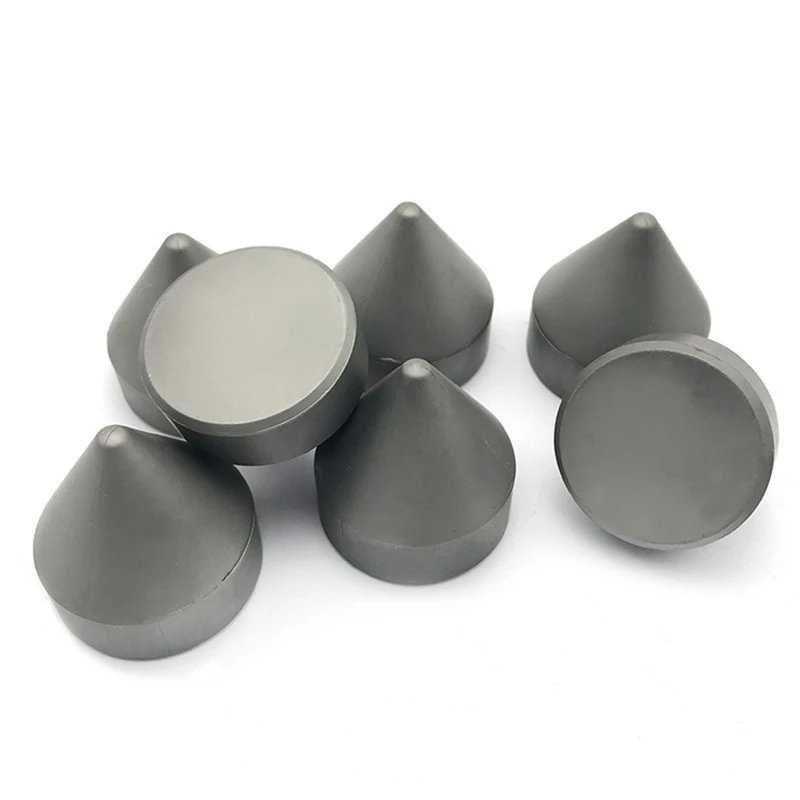
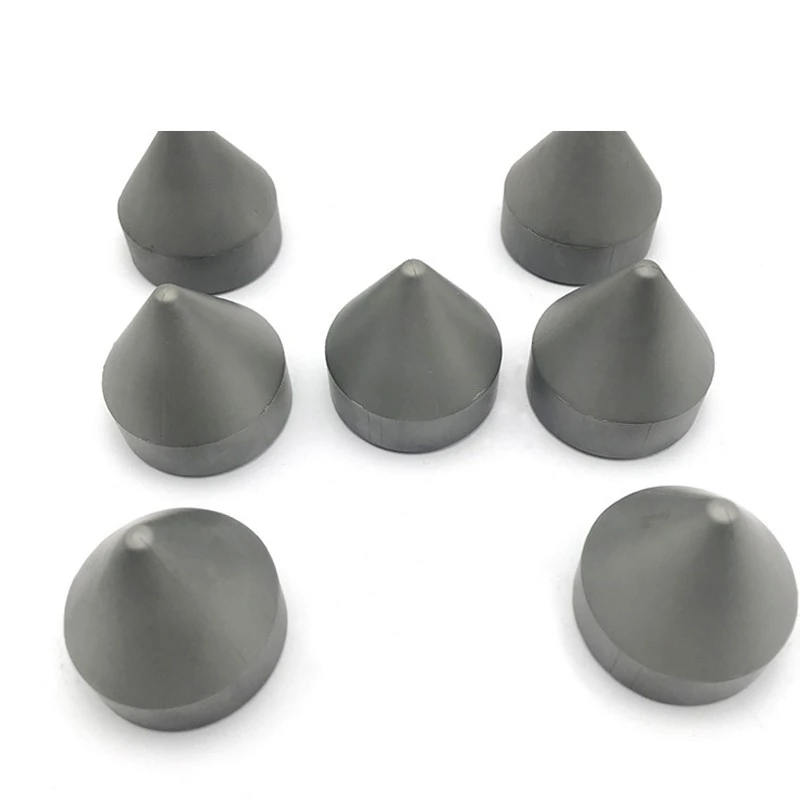
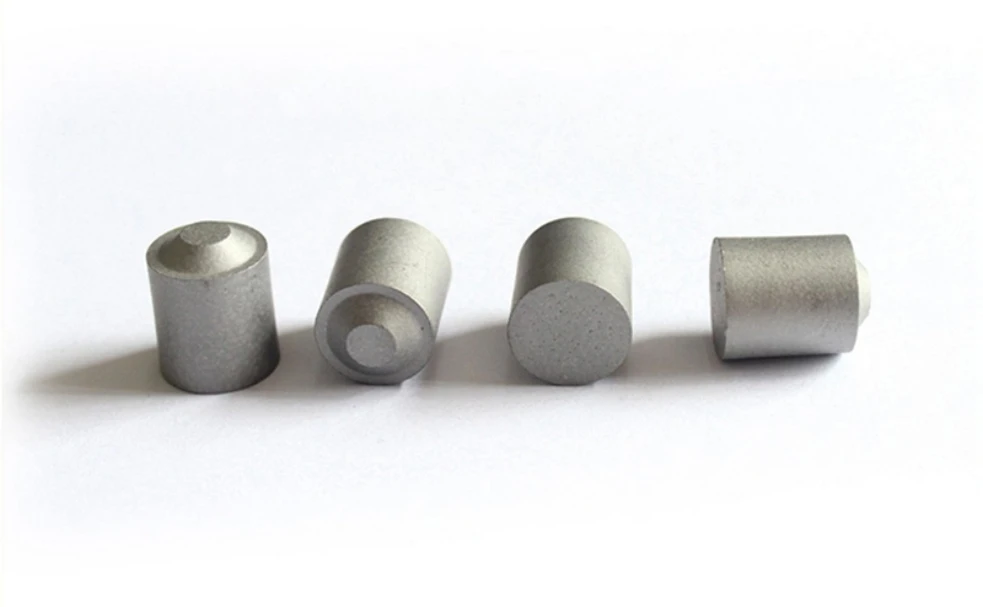
Oil exploitation drilling bit teeth widely used in snowplows for oil drilling and snow removal, it is made mainly of tungsten carbide and is a high-hardness industrial part produced through powder metallurgy technology. It has excellent wear resistance and impact toughness. Its main application fields include oil drilling (rotary drill bits, plunge drill bits), mining (stone quarrying, mining, tunnel engineering), road maintenance and snow plow snow removal equipment, and can be adapted to rotary drill bits, geological drilling tools, etc.
This part is classified into types such as P-type flat-top teeth, Z-type coin-shaped teeth, and X-type wedge-shaped teeth according to functional requirements, and corresponding different grades (such as YG6, YG11C) are used to match soft to medium-hard rock layer conditions.

The tungsten carbide ball teeth are also known as tungsten carbide chisels and are a synthetic material made by powder metallurgy technology from hard compounds of refractory metals and bonding metals. It is mainly composed of hard compounds such as tungsten carbide (WC) powder and bonding metals such as cobalt (Co) or nickel (Ni) powder. Its typical structure is a ball head (working part) at one end, a 18° chamfer at the other end, and a cylindrical body in the middle. tungsten carbide ball teeth have a series of excellent properties such as high hardness, high wear resistance, high strength, impact resistance, high temperature resistance (such as the hardness and shape remain basically unchanged at 500°C and still have high hardness at 1000°C), and corrosion resistance. Tungsten carbide ball teeth are widely used in oil drilling (rotary drill bits, plunge drill bits), mining (stone quarrying, mining, tunnel engineering), road maintenance, tunnel excavation, and snow plow snow removal equipment (such as snow plows).

Tungsten carbide is the main material for manufacturing tungsten carbide ball teeth widely used in the high-pressure plunge hammer drilling industry.
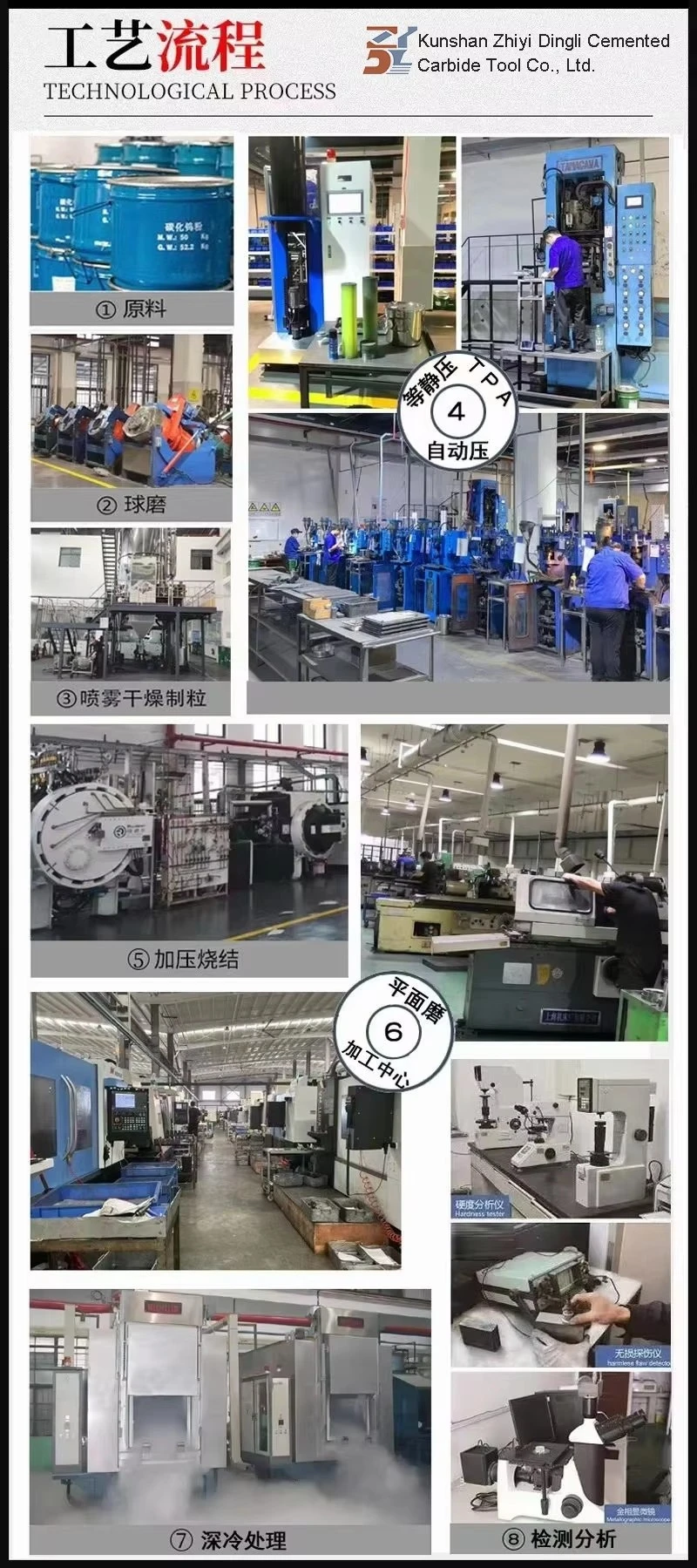
The manufacturing process adopts isostatic pressing molding and vacuum sintering technology. Some products are improved by rare earth doping to enhance bending strength (≥4200 MPa) and anti-adhesion wear performance. Compared with traditional blade heads, its blunting cycle is extended by 5-6 times, significantly improving drilling efficiency and reducing equipment maintenance frequency. In oil drilling, it serves as the core component of the drill bit to ensure drilling stability. In mining, it is used for coal cutting teeth, ball-shaped teeth, etc., and in road engineering, it is mainly integrated into the transmission system of snow plow machines to cope with high-intensity friction environments.
Characteristics
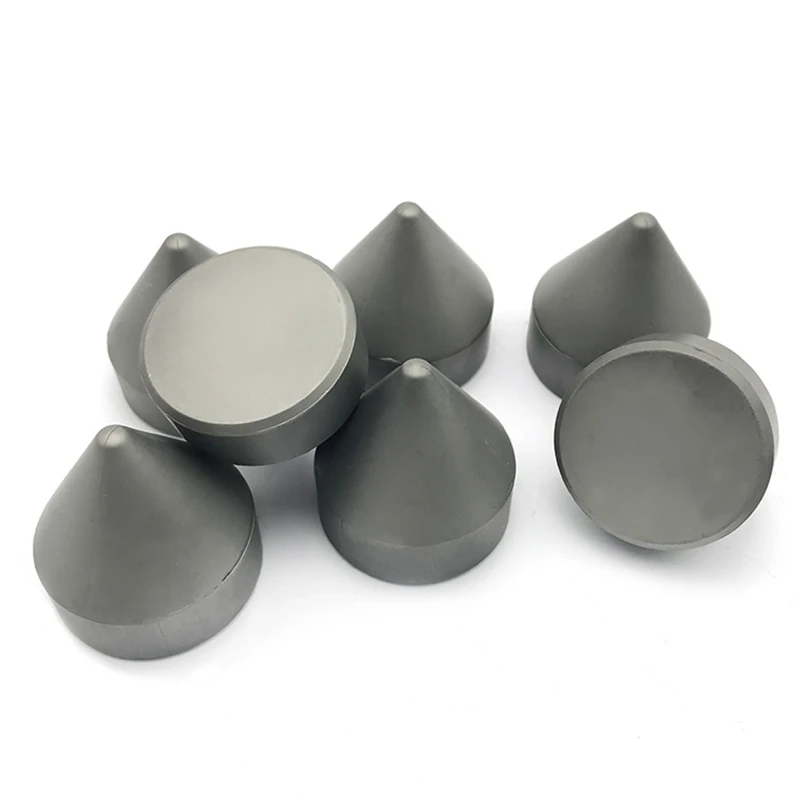
The oil exploitation drilling bit teeth, due to their own characteristics such as high hardness of the tungsten carbide, are widely used in mining, quarrying and cutting processes, and can also be used in the drill bits of heavy-duty excavators.
|
Grade |
Density g/cm³ |
MOR MPa |
Hardness HRA |
Characteristics and Recommended Applications |
|
YG4C |
15.10 |
1800 |
90.0 |
mainly used as an impact drill bit for cutting soft, medium and hard materials. |
|
YG6 |
14.95 |
1900 |
90.5 |
used as electric coal drill bits, coal cutting teeth, petroleum cone bits and scraper ball tooth drill bits. |
|
YG8 |
14.80 |
2200 |
89.5 |
used as core drills, electric coal drill bits, coal cutting teeth, petroleum cone bits and scraper ball tooth drill bits. |
|
YG8C |
14.80 |
2400 |
88.5 |
mainly used as ball teeth for small and medium-sized impact drill bits, and as the bearing bush for rotary exploration drills. |
|
YG11C |
14.40 |
2700 |
86.5 |
most of these are the ball teeth used in impact drill bits and tricone drill bits to cut hard materials. |
|
YG13C |
14.2 |
2850 |
86.5 |
mainly used for the ball teeth in the rotary impact drill bit, which are used to cut medium and high hardness materials. |
|
YG15C |
14.0 |
3000 |
85.5 |
used for oil cone drill bit and cutting tools used in the excavation of medium soft and medium hard rocks. |
Main classification
There are various classification methods for tungsten carbide ball teeth, and these classifications are based on different criteria, such as industry standards, appearance shapes, design forms, and material compositions, to meet the requirements of different working conditions and applications.
According to national standards or industry practices, tungsten carbide ball teeth can be classified as Q type (ball teeth), Z type (coin-shaped ball teeth), X type (wedge teeth), B type (edge wedge teeth), S type (semi-circular teeth), and P type (flat top teeth), etc.
For example:
- The Q0810 model of Q type ball teeth has a diameter D of 8 millimeters, a total height H of 10 millimeters, a tooth height h of 7.1 millimeters, a ball head radius R of 4.2 millimeters, and a chamfer e of 1.5 millimeters;
- The Z0810 model of Z type coin-shaped ball teeth has a diameter D of 8 millimeters, a total height H of 10 millimeters, a tooth height h of 6.5 millimeters, a ball head radius R of 3 millimeters, a chamfer e of 1.5 millimeters, and an angle α of 35 degrees;
- The X0810 model of X type wedge teeth has a diameter D of 8 millimeters, a total height H of 10 millimeters, a tooth height h of 6.5 millimeters, a ball head radius R of 2.0 millimeters, a root radius r of 1.8 millimeters, a chamfer e of 1.5 millimeters, an angle α of 45 degrees, and an angle β of 22.5 degrees.
The tungsten carbide ball teeth are mainly classified by their surface shapes into hemispherical teeth, conical teeth, parabolic teeth and wedge-shaped teeth, etc. Different shapes of ball teeth have different performance and application ranges. The hemispherical teeth have high energy utilization rate and good rock-breaking effect under the condition of sufficient impact power of the hydraulic rock drill, while the conical teeth are easy to penetrate the rock and have a higher drilling speed but poorer wear resistance. The wedge-shaped teeth are suitable for hard and highly abrasive rocks.
Depending on the design form, the tungsten carbide ball teeth include types such as conical ball teeth, wedge-shaped teeth, coal cutting teeth, road-digging teeth, flat-top teeth, pointed claws, spoon-shaped teeth and mushroom teeth.
Depending on the composition of the material, there are various grades of tungsten carbide ball teeth. Common ones include YG4C, YG6, YG8, YG8C, YG11C, YG13C and YG15C, etc,. The physical and chemical performance indicators and applicable scenarios vary for different grades. For instance, grades such as YG6 and YG11C are used to match soft to moderately hard rock layer conditions.
Application fields
Oil exploitation drilling bit teeth are widely used in oil drilling, mining, road maintenance and snow plowing equipment. They are specifically used in tricone drill bits, plunge drill bits, geological drilling tools, etc,.
In the field of mining, tungsten carbide ball teeth are used for quarrying, mining, and tunnel engineering, serving as mining tools for civil buildings and tunnel excavation. In the areas of road maintenance and snow removal, tungsten carbide ball teeth are used in snow plowing equipment and road cleaning tools.
In addition, tungsten carbide ball teeth can also be used in electric coal drill bits, coal mining machines, scraper ball tooth drill bits, oil cone drill bits, impact drill bits for cutting soft, medium-hard and medium-high hardness materials, and other mechanical equipment.

Manufacturing process
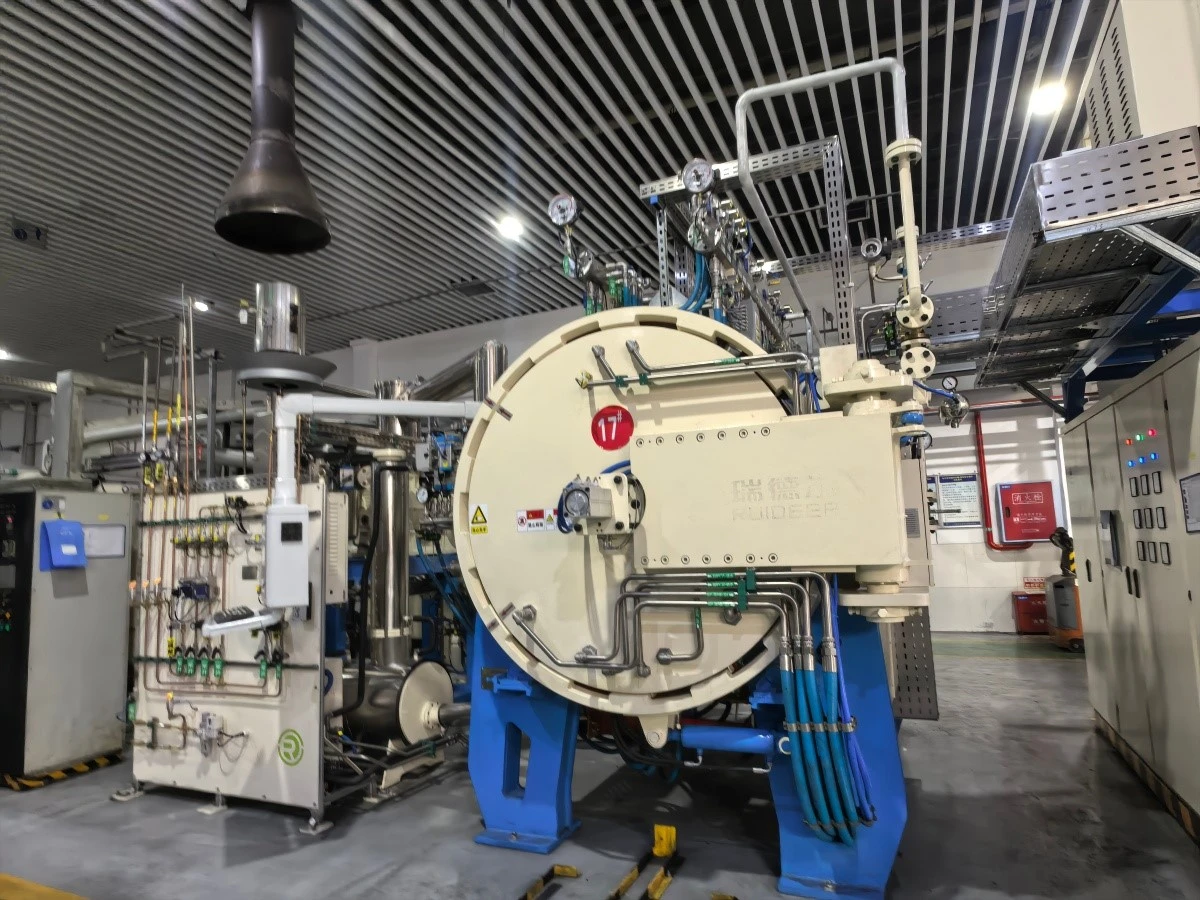
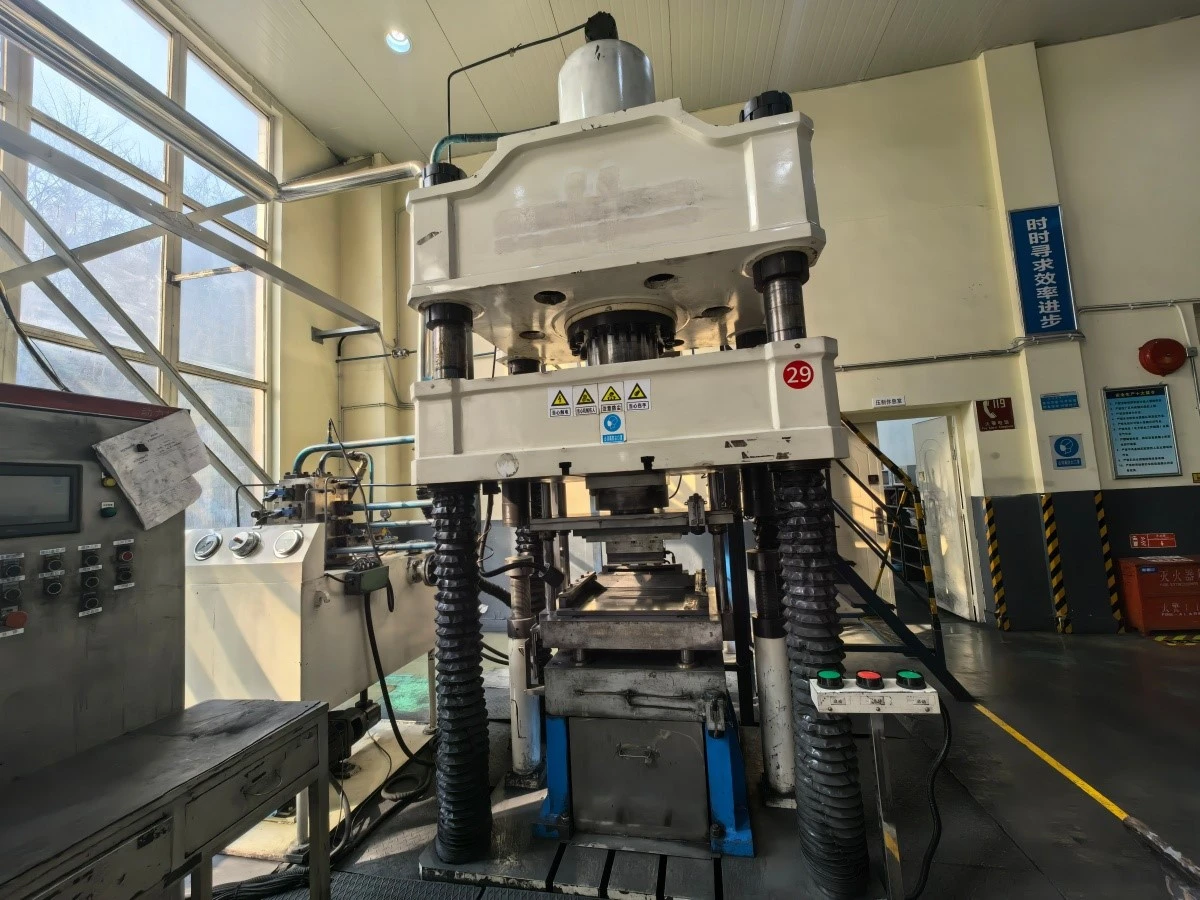
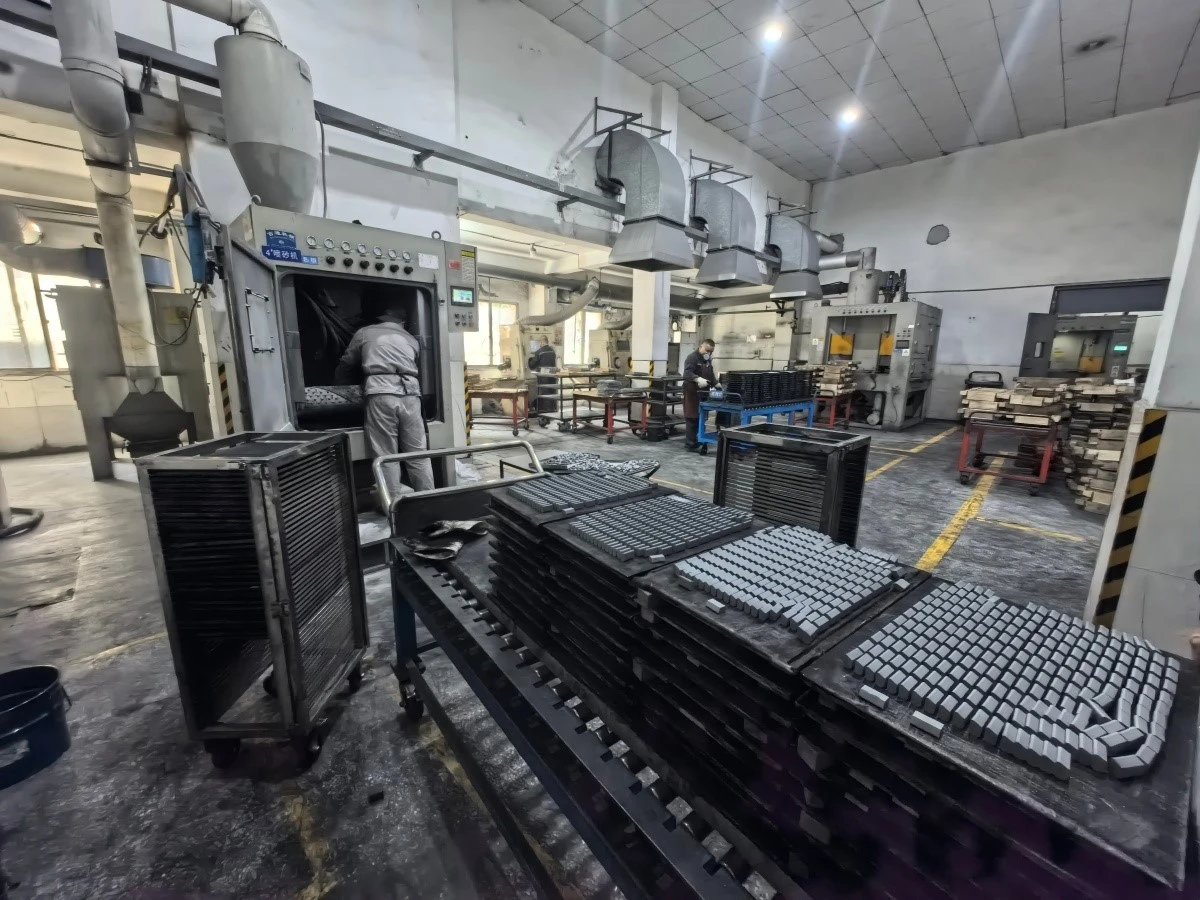
Oil exploitation drilling bit teeth are a synthetic material made by combining refractory metal hard compounds with bonding metals through powder metallurgy technology. Tungsten carbide ball teeth are mainly composed of tungsten carbide as the main raw material and are produced through powder metallurgy technology . The ball teeth are mainly formed by isostatic pressing machines to ensure uniform density distribution and reduce the occurrence of tooth detachment during use. The manufacturing process adopts isostatic pressing molding and vacuum sintering technology. tungsten carbide ball teeth use non-center grinding technology, with high dimensional accuracy, which is convenient for users to perform precise welding and is less likely to detach.
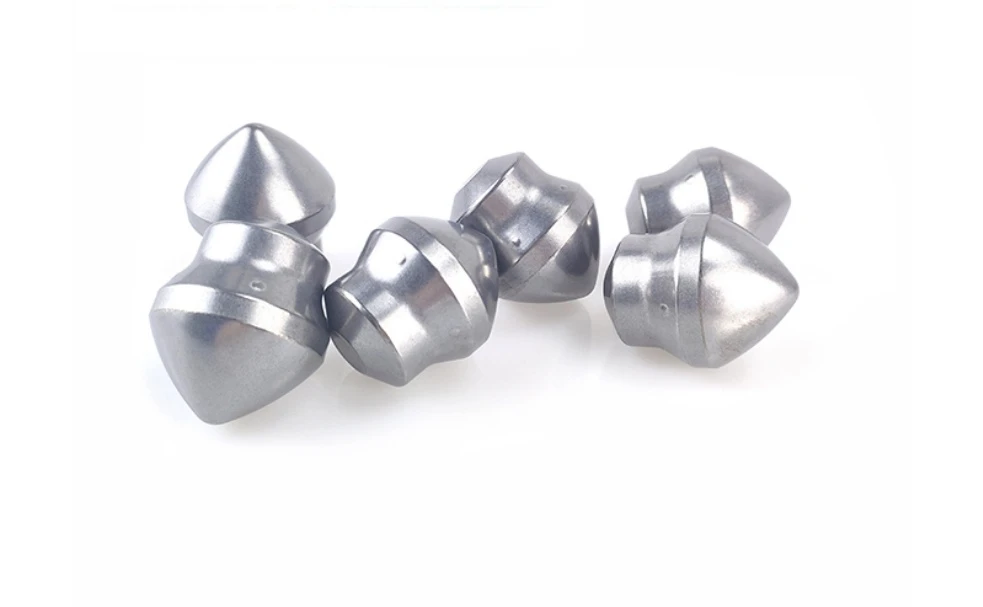
To address the issues of insufficient wear resistance of tungsten carbide ball teeth and insufficient impact resistance of composite sheet ball teeth, a tungsten carbide-polycrystalline diamond composite ball tooth was designed. This composite ball tooth has its specific processing technology. Its impact resistance is stronger than that of composite sheet ball teeth, and its wear resistance is stronger than that of tungsten carbide ball teeth.
Market Overview
The world market for tungsten carbide products is largely saturated and the competition is extremely fierce. The market size of the tungsten carbide ball teeth industry is usually estimated based on industry data monitoring and using various estimation models. In the estimation of the market size of tungsten carbide ball teeth, methods such as source deduction method, strong correlation data deduction method, demand deduction method, sampling analysis method and typical reverse deduction method are mainly adopted.


Hot Products

Company Information
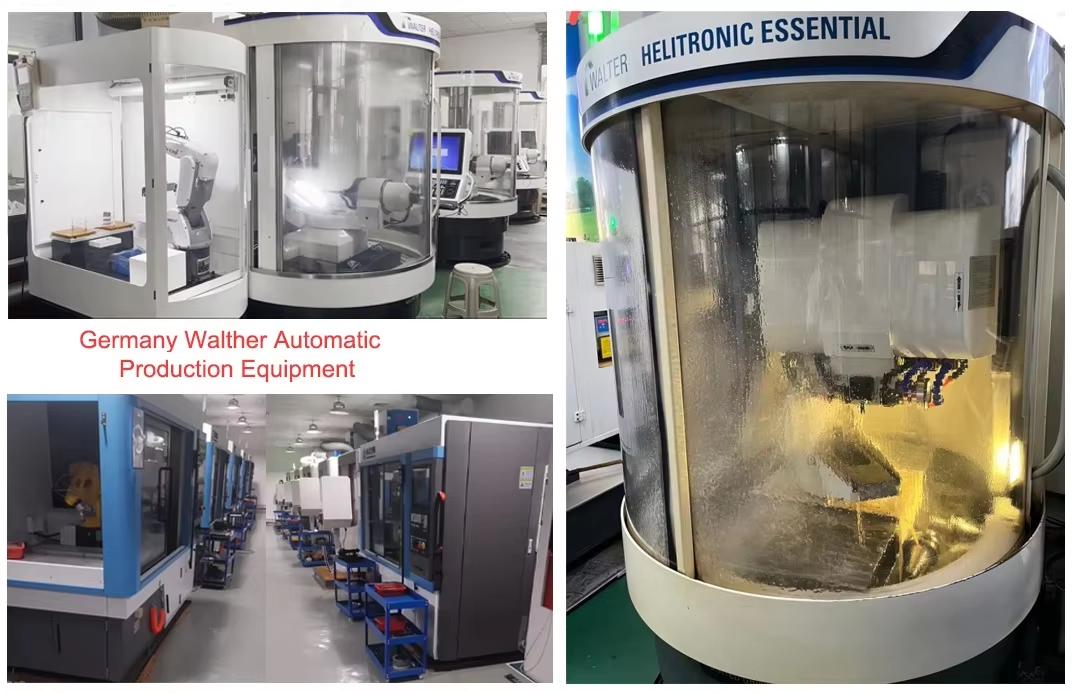
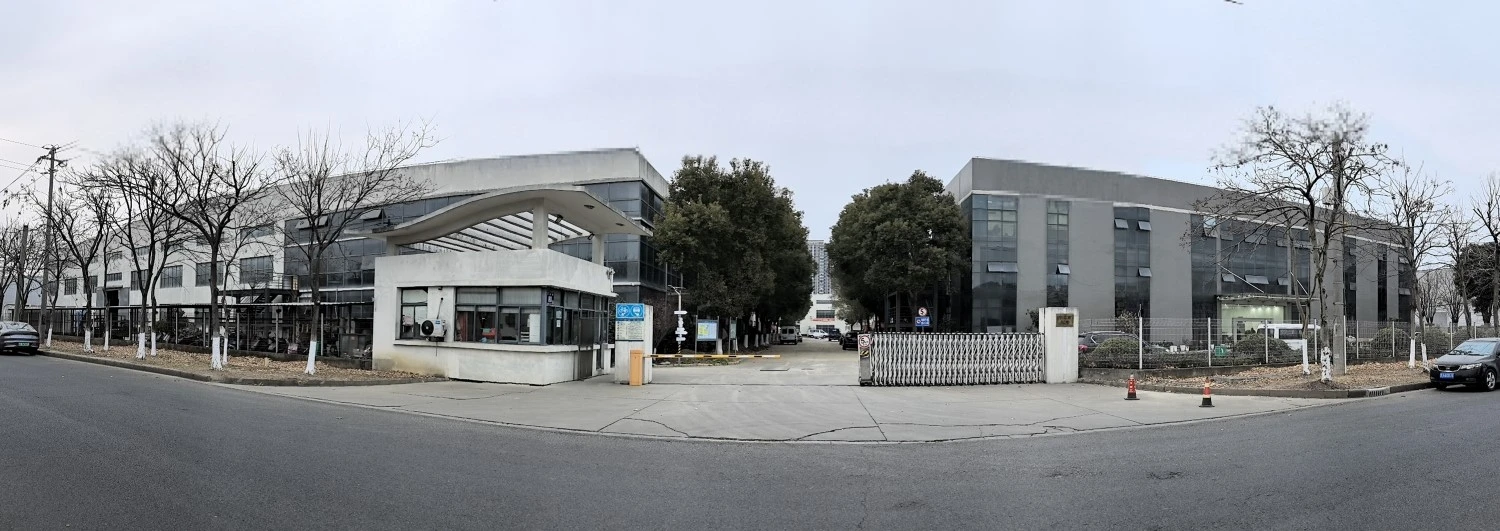
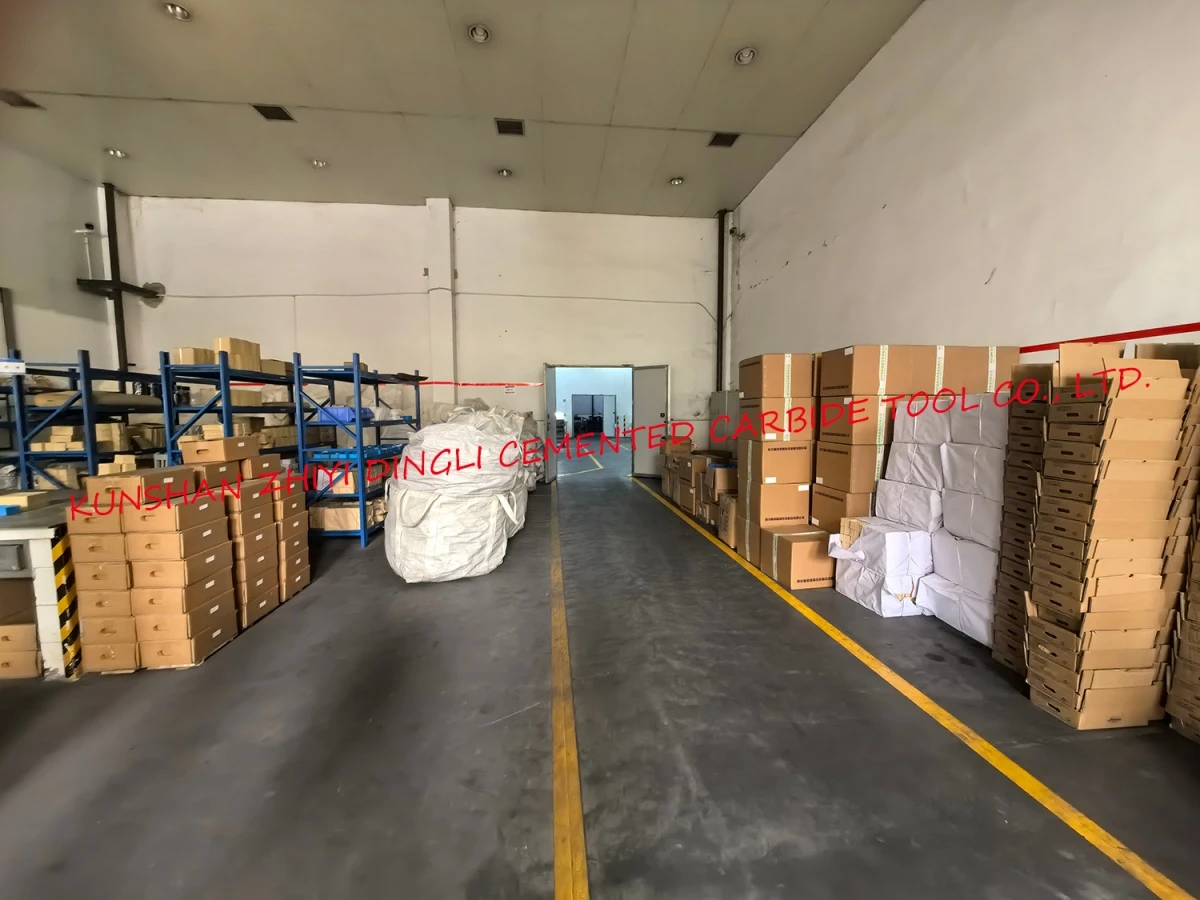
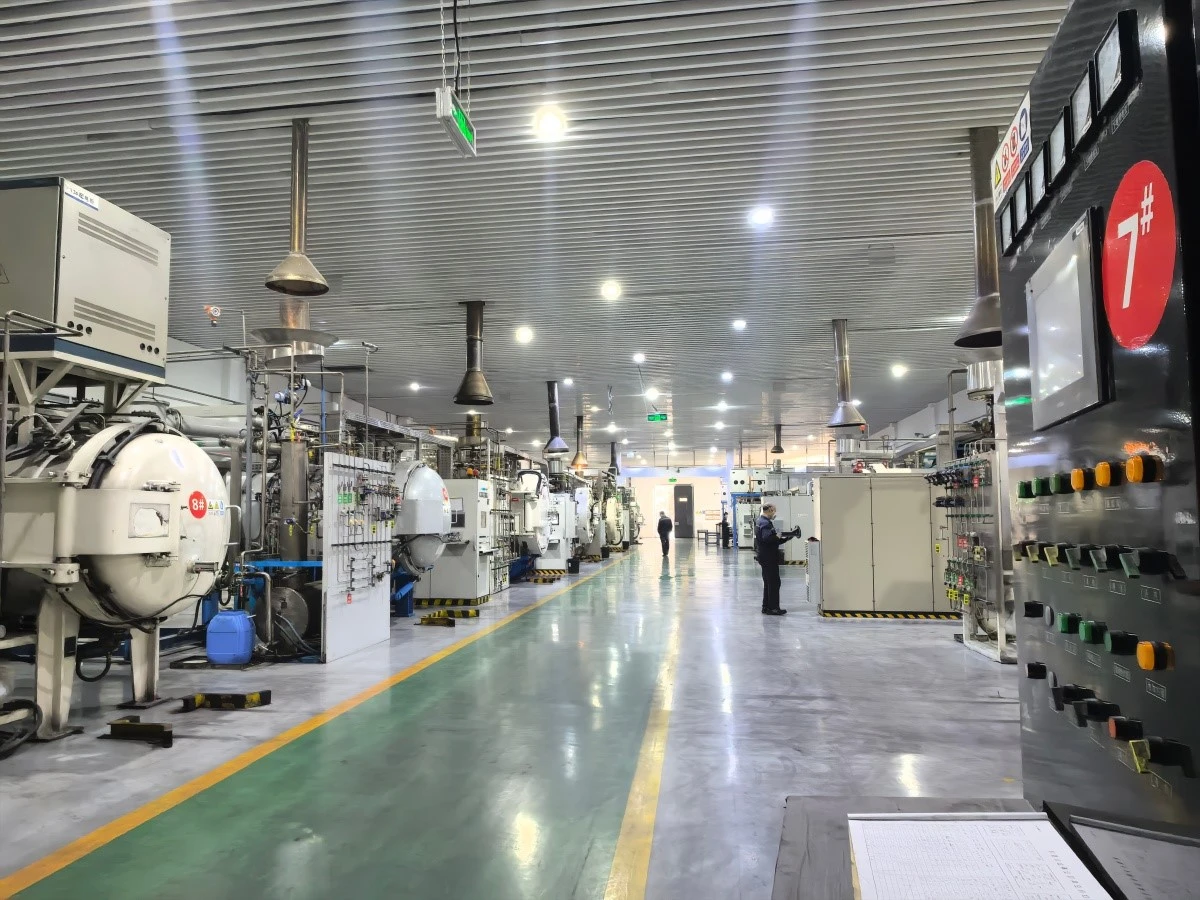
Kunshan Zhiyi Dingli Cemented Carbide Tool Co., Ltd. is a professional manufacturer of high-performance carbide oil drilling bit teeth (PDC polycrystalline diamond composite teeth) for oil exploration, gas drilling, and snowplow applications. Our teeth are fabricated from premium tungsten carbide using powder metallurgy technology, achieving the optimal balance of wear resistance and impact toughness required for rotary drill bits and plunge drill tools. With excellent drilling speed and extended service cycles, our teeth significantly outperform conventional steel bits in challenging geological formations.
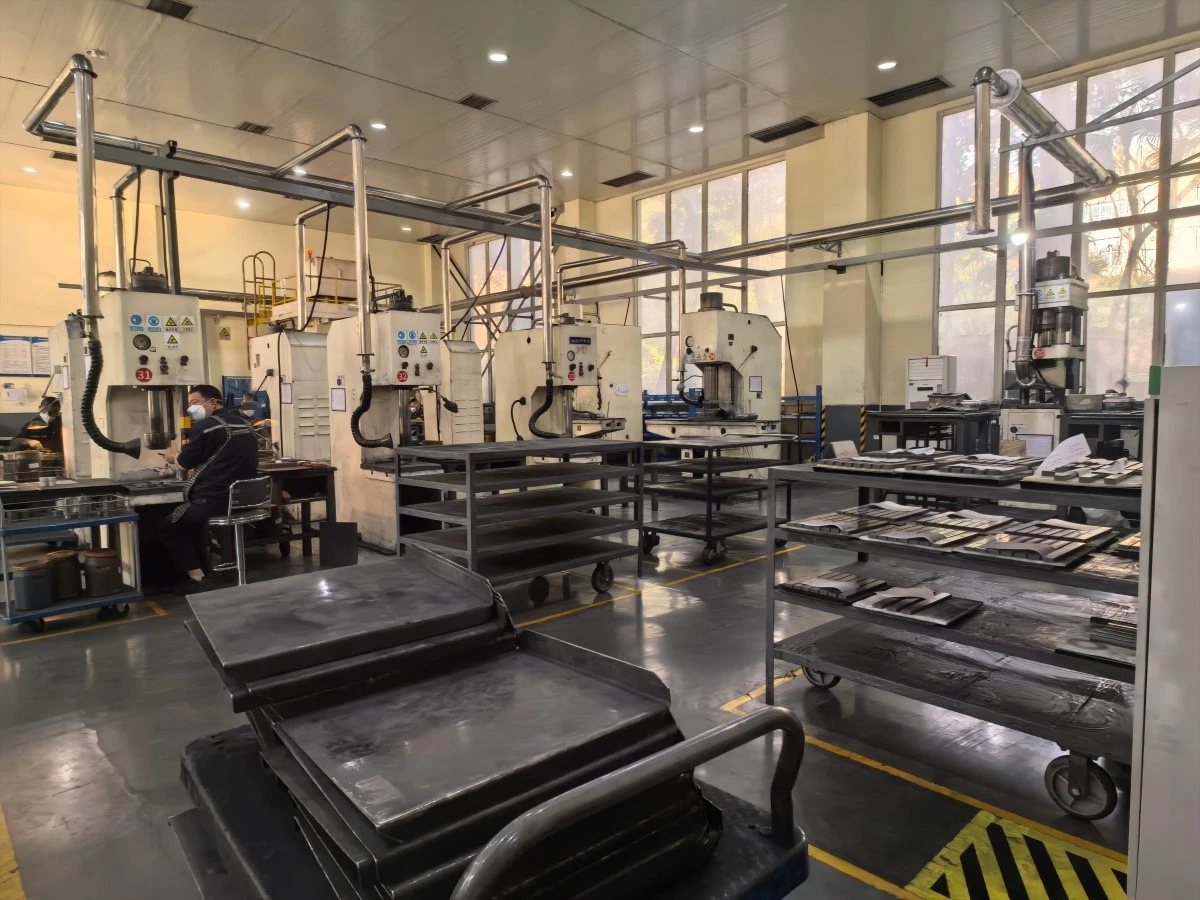
Our factory produces oil drilling bit teeth in over 200 standard types and sizes covering rotary drill bits, PDC drill bits, and snowplow blade inserts. With hot isostatic pressing (HIP) technology and strict quality control, we ensure consistent hardness (HRA 89–92) and impact toughness across every batch. Monthly production capacity exceeds 30,000 pieces, serving oilfield service companies in North America, the Middle East, and Russia.



Testing Machine

Production Flow Chart

Packing & Delivery
Packing
1>Put the goods encased with plastic bag or plastic case in wooden box/carton/iron box, etc.
2>Other packing will be accept according to your needs.


FAQ
Q1: What sizes of oil drilling teeth do you produce?
A1: We produce teeth from Ø8 mm to Ø50 mm in diameter, covering all standard PDC bit and rotary bit tooth profiles.
Q2: What is the typical drilling speed improvement?
A2: Our carbide teeth typically achieve 2–3× faster drilling speed compared to conventional steel bits.
Q3: Do you offer custom tooth profiles?
A3: Yes, we can develop custom profiles from drawings or bit manufacturer specifications within 15–20 working days.
About Color Aberration
Product pictures are all physical photography, due to photo-taking technology, light, display parameters, etc., there may be differences between the received physical objects and photos, please refer to the physical.
Cargo Receipt
All our products go through strict inspection and count before shipment. Please check the goods in person when they receive them.
Please refuse to sign and contact us if you find that the CTN number and model is wrong or the product is damaged in transit.
Hot Tags: oil exploitation drilling bit teeth, China oil exploitation drilling bit teeth manufacturers, suppliers, factory, Brazed Chip Button, carbide mining, Coal Mining Teeth, Composite Matrix, Mine Engineering Drill Teeth, Oil Exploitation Drilling Bit Teeth